Falling Short

I recently created a multi-genre document which explores discrepancies in the way the media reports on climate change.

Falling Short

Apologies that the visual quality isn’t too great. I conveniently lost my digital copy of this file and all I had was a hard copy, which I scanned, losing some of the quality in the process.

Enjoy!

All Over the Map

The climate change debate is usually categorized into two sides. One side claims that humans are causing the Earth to warm. The other claims that they are not.

But does the second side have an alternate scientific explanation for why humans are not causing climate change? When they are the extreme minority of scientific opinion, the burden of proof is really on them. So let’s look at the scientific theories of some of the more prominent skeptics.

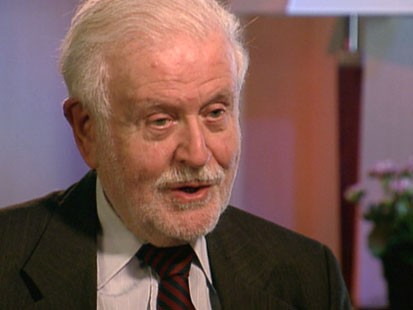
Dr S. Fred Singer

Dr S. Fred Singer

Dr S. Fred Singer is an atmospheric physicist and a professor of environmental science at the University of Virginia. He is widely known for his opposition to the mainstream opinion regarding climate change, and has a history of being funded by oil companies and conservative think-tanks to promote this skepticism. (He was similarly funded for his opposition to the theory of tobacco causing cancer, as well as the theory of CFCs depleting ozone.)
Dr Singer claims that the observed warming is a natural phenomenon that occurs every 1500 years. He uses data from the Greenland ice core to support this theory. The data illustrates repeating D-O events, a well-known phenomenon from the last ice age, in which ocean currents caused the Greenland ice cap to warm while the Antarctic ice cap cooled. There was no change in the energy balance of the Earth, and little, if any, change in average global temperatures. Peter Sinclair created a fantastic video about Dr Singer’s D-O theory which you should all check out here.
With the training and knowledge he has, you’d hope Dr Singer would know to always use data from both poles when addressing issues of paleoclimatology. But, given his track record, there’s a good chance he’s deliberately trying to deceive us.
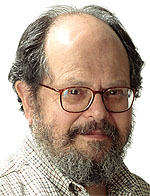
Dr Richard Lindzen

Dr Richard Lindzen

Dr Richard Lindzen is an atmospheric physicist and professor of meteorology at MIT. He was one of the many lead authors of the third IPCC report. His scientific work seems to follow the mainstream opinion……but he seems like a skeptic in the media. He is just as prominent as Dr Singer – between the two of them they’ve probably written most of the skeptical newspaper editorials out there. Like Dr Singer, Dr Lindzen is known to have been paid by the oil industry to promote his views on climate change.

But what are those views? It’s hard to know. Given his publications and participation in IPCC, it seems like he agrees with the basic physical processes of climate change. In an interview with Canadian climatologist Andrew Weaver, he seemed to acknowledge that humans were changing the climate, but didn’t think the consequences would be too bad. But he also likes to claim that there is little agreement or confidence, regarding anthropogenic climate change, in the scientific community. He told the Boston News that the Greenland ice sheet was thickening, indicating cooling – while it is well known that the thickening is due to an increase in snow from warmer temperatures. He’s also claimed that climatologists made up global warming so they would get more grant money.

Richard Lindzen says so many different things – it’s hard to tell whether or not he has a consistent opinion. Again, in scientific circles, he’s working just fine with the mainstream opinion. But then he goes to the media and spews out all the contrary arguments he can think of. My best guess is that Dr Lindzen is trying to confuse the public on climate change, because he doesn’t want action to be taken. But who knows?

Dr Anthony Watts

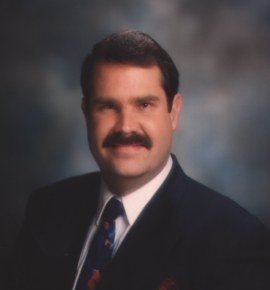
Anthony Watts

Anthony Watts is a weather forecaster, but now spends most of his time running the websites Watt’s Up With That? and Surface Stations. He believes that temperature data stations are producing flawed data, showing a false warming trend. He spends a lot of time trying to explain how observed signs of warming, such as melting ice sheets, are irrelevant.
However, we could forget the temperature data altogether, throwing out all the GISS graphs of temperature changes. We could instead look at changes in the timing of physical and biological events, such as when birds migrate, when snow melts, or when flowers bloom. NASA recently conducted such a study, and found that 90% of the 29,500 data sets studied indicated warming temperatures.
These are three of the most prominent skeptics who are actually qualified to understand climate change. If this small community – perhaps no more than a few dozen scientists worldwide – had a consistent scientific theory to explain why humans are not causing climate change, perhaps we’d pay more attention to them.
But they’re all saying different things. Their ideas are all over the map. I don’t think I’ve even seen two skeptics who share the same theory.
They’re working as hard as they can to disprove climate change, but they can’t even agree on an alternate explanation.

Skepticism and Denial

Skepticism and denial are two words that many climate change activists throw around. What is the difference between them? What is the appropriate usage for each? And which camp do most of so-called “global warming skeptics” fall into?

A skeptic is someone in doubt. The key word here is “doubt”. They are willing to listen to evidence from all sides because they haven’t formed an opinion yet. However, it will take very strong evidence for them to accept a theory or belief.

All scientists are taught to be skeptical – to never make assumptions, jump to conclusions, or accept a theory without asking further questions. Skepticism is scientific nature. It is a way of saying, “I don’t know enough about the topic to make a decision.” Skepticism shows inherent objectivity.

A denialist will adamantly reject something, no matter how much evidence supports it. They will only listen to evidence from the side of the debate they support. Unlike a skeptic, who will accept a theory when strong evidence arises, a denialist will never accept a theory. Denial shows inherent bias.

Applying these definitions

In the context of climate change, I feel that denial, in a way, is opposite to skepticism. All over the Internet there are people claiming that climate change is nonexistent/natural/a global conspiracy. They say that they are “skeptical” of the evidence that humans are causing the Earth to warm. Let’s look at a rather tragic story and see if it sheds some light on whether they are actually skeptical, or if they are, in fact, in denial.

In The Great Global Warming Swindle – as well as countless other sources – a graph is presented which shows the Medeival Warm Period to be slightly warmer than the present day.

ipcc1This graph is from the first IPCC report, dated 1990. The film is adamant that this graph is correct. However, in the years following 1990, the IPCC did more research on the Medeival Warm Period, as almost all of their historical temperature data was from Europe. They looked at data from other parts of the world and discovered that the warming was confined to Europe. The Earth, as a whole, hardly warmed at all. By the third IPCC report, the graph had advanced dramatically, to what is known as “the hockey stick”.

ipcc2

This graph prompted a lot of yelling and screaming, and a lot of claims that the IPCC was forging data. But, in actuality, their data set had just improved. And it was continuing to improve. By its fourth report, the IPCC had not just a hockey stick, but a whole hockey team.

ipcc4

This graph, the most recent, was created by the same source as the first graph, which showed the Medeival Warming Period to be warmer than today. It was 17 years more recent. It had advanced dramatically. However, the Great Global Warming Swindle et al continued to use the graph from 1990 and claim that it was credible. Do they hold valid scientific concerns regarding the stastical methods used to create the more recent graphs? Or are they simply cherry-picking data?

There are other, similar, stories. Many skeptics put incredible faith on the idea that other planets might be warming – a dubious area of research we’re just starting to explore – and then turn around and say that the Earth’s temperature record, which has been going strong for a century, is flawed. They say that the 1970s theory of an impending ice age – which was mentioned by a single, discredited paper – held complete consensus in the scientific community, whereas there is apparently “no agreement” over the idea of human-caused warming.

They call themselves “skeptics”. But how can they really be of skeptical nature when they are clinging to certain pieces of evidence in a way that’s not skeptical at all? How can they claim that they hold logic, rationality, and common sense when they are advocating – without analysis, investigation, or statements of uncertainty – for all evidence which supports their pre-conceived conclusion?

Does this show inherent objectivity – skepticism?

Or does it show inherent bias – denial?