Unknown's avatar

About climatesight

Kaitlin Naughten is an ocean-ice modeller at the British Antarctic Survey in Cambridge.

Context

Most long-time readers are familiar with the story of Stephen Schneider’s misquoting, which I discussed in one of my earliest posts. Read that post if you haven’t already, otherwise the rest of this post won’t make a lot of sense.

So imagine my surprise and disgust when I received a “pingback” (a message that someone else on WordPress has linked to your site) from a post entitled “Environmental Hoax Proof”. The post on WordPress looked like it was republished from somewhere else, and I believe this is the original.

The part of the post which links to me is as follows:

“We need to get some broad based support, to capture the public’s imagination. So we have to offer up scary scenarios, make simplified, dramatic statements and make little mention of any doubts. Each of us has to decide what the right balance is between being effective and being honest.” – Stephen Schneider, Stanford Professor of Climatology, lead author of many IPCC reports

https://climatesight.wordpress.com/2009/04/12/the-schneider-quote/

The author must have read my post before linking to me. Yet they printed the widely-circulated, out-of-context quote anyway.

A lot of people use that particular quote without knowing the backstory. But the author of this post must have known the backstory (unless they didn’t even bother to read what they were providing as a source), and chose to print the seemingly scandolous quote anwyay.

Dishonesty. Fundamental dishonesty. And a real strong faith in the readers that they won’t actually click on the links.

The rest of the post included a lot of similar quotes from climatologists and environmentalists. I could tell without even looking further into any of them that they were similarly out of context.

What does this say about the credibility of some of our opponents?

All Over the Map

The climate change debate is usually categorized into two sides. One side claims that humans are causing the Earth to warm. The other claims that they are not.

But does the second side have an alternate scientific explanation for why humans are not causing climate change? When they are the extreme minority of scientific opinion, the burden of proof is really on them. So let’s look at the scientific theories of some of the more prominent skeptics.

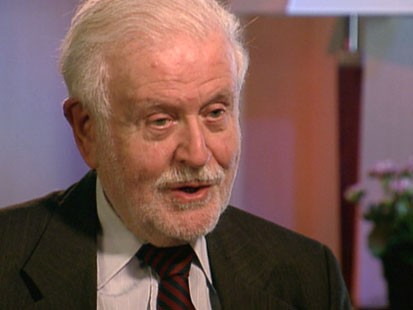
Dr S. Fred Singer

Dr S. Fred Singer

Dr S. Fred Singer is an atmospheric physicist and a professor of environmental science at the University of Virginia. He is widely known for his opposition to the mainstream opinion regarding climate change, and has a history of being funded by oil companies and conservative think-tanks to promote this skepticism. (He was similarly funded for his opposition to the theory of tobacco causing cancer, as well as the theory of CFCs depleting ozone.)
Dr Singer claims that the observed warming is a natural phenomenon that occurs every 1500 years. He uses data from the Greenland ice core to support this theory. The data illustrates repeating D-O events, a well-known phenomenon from the last ice age, in which ocean currents caused the Greenland ice cap to warm while the Antarctic ice cap cooled. There was no change in the energy balance of the Earth, and little, if any, change in average global temperatures. Peter Sinclair created a fantastic video about Dr Singer’s D-O theory which you should all check out here.
With the training and knowledge he has, you’d hope Dr Singer would know to always use data from both poles when addressing issues of paleoclimatology. But, given his track record, there’s a good chance he’s deliberately trying to deceive us.
Dr Richard Lindzen

Dr Richard Lindzen

Dr Richard Lindzen is an atmospheric physicist and professor of meteorology at MIT. He was one of the many lead authors of the third IPCC report. His scientific work seems to follow the mainstream opinion……but he seems like a skeptic in the media. He is just as prominent as Dr Singer – between the two of them they’ve probably written most of the skeptical newspaper editorials out there. Like Dr Singer, Dr Lindzen is known to have been paid by the oil industry to promote his views on climate change.

But what are those views? It’s hard to know. Given his publications and participation in IPCC, it seems like he agrees with the basic physical processes of climate change. In an interview with Canadian climatologist Andrew Weaver, he seemed to acknowledge that humans were changing the climate, but didn’t think the consequences would be too bad. But he also likes to claim that there is little agreement or confidence, regarding anthropogenic climate change, in the scientific community. He told the Boston News that the Greenland ice sheet was thickening, indicating cooling – while it is well known that the thickening is due to an increase in snow from warmer temperatures. He’s also claimed that climatologists made up global warming so they would get more grant money.

Richard Lindzen says so many different things – it’s hard to tell whether or not he has a consistent opinion. Again, in scientific circles, he’s working just fine with the mainstream opinion. But then he goes to the media and spews out all the contrary arguments he can think of. My best guess is that Dr Lindzen is trying to confuse the public on climate change, because he doesn’t want action to be taken. But who knows?

Dr Anthony Watts

Anthony Watts

Anthony Watts is a weather forecaster, but now spends most of his time running the websites Watt’s Up With That? and Surface Stations. He believes that temperature data stations are producing flawed data, showing a false warming trend. He spends a lot of time trying to explain how observed signs of warming, such as melting ice sheets, are irrelevant.
However, we could forget the temperature data altogether, throwing out all the GISS graphs of temperature changes. We could instead look at changes in the timing of physical and biological events, such as when birds migrate, when snow melts, or when flowers bloom. NASA recently conducted such a study, and found that 90% of the 29,500 data sets studied indicated warming temperatures.
These are three of the most prominent skeptics who are actually qualified to understand climate change. If this small community – perhaps no more than a few dozen scientists worldwide – had a consistent scientific theory to explain why humans are not causing climate change, perhaps we’d pay more attention to them.
But they’re all saying different things. Their ideas are all over the map. I don’t think I’ve even seen two skeptics who share the same theory.
They’re working as hard as they can to disprove climate change, but they can’t even agree on an alternate explanation.

A Retraction?

A recent comment by a long-time reader brought a new piece of information to my attention. “What about the JSER?” they asked. “[Someone claimed] that it was a Japanese scientific society that endorsed the falsity of global warming…..What do you think?”

Did this bring the absense of disagreement among professional scientific organizations, at the top of our credibility spectrum, to a close?

I mulled it over and decided to do what seemed to be the most honest course of action. I would research this claim as thoroughly as my resources allowed, and if it turned out to be true, I would publish a retraction of my former statement regarding organizations.

First, however, I needed to get more information. I researched with the following questions in mind:

1) Is the JSER a professional scientific organization? This part of the claim appeared to be true – according to the English section of their website, they published a scientific journal, held conferences and seminars, and boasted over 1500 members.

However, the JSER – the Japan Society of Energy and Resources – likely has a high chance of bias. Its goal is “to promote the science and technology concerning energy and resources and thus to facilitate cooperation among industry academia and governmental sectors for coping with the problems in this field.” With today’s fossil-fuel dependent economy, the JSER likely has a lot of members representing the oil and gas industry. Oil and gas officials can easily fall prey to confirmation bias – their jobs depend on a resource which is causing dire problems for our planet. In their situation, it’s often easiest to deny such problems. In fact, the final scientific organization to change its statement from “humans aren’t affecting the climate” to “oops, yes they are” was the American Association of Petroleum Geologists.

2) Did the JSER officially state that humans aren’t affecting the climate? I found no evidence for an official statement.

3) So where did the claim come from? It started with a written discussion between five JSER representatives. One, the only climatologist of the five, defended the mainstream opinion that humans are causing climate change. One was undecided. The remaining three rejected the theory.

However, this discussion was mistakenly perceived as a “report” by The Register, a British media news source. I found no evidence that this so-called “report” was peer-reviewed (and how could it possibly have passed peer-review – it claimed that global warming stopped in 1998!). For example, the Register article noted, “Remarkably, the subtle and nuanced language typical in such reports has been set aside.” One of the authors is alleged to have compared climatology to ancient astrology.

I think we can safely leave this source as an email debate between colleagues. I cannot imagine how it could be a peer-reviewed document worthy of consideration.

However, as always, I could be wrong. There is little on the Internet regarding the JSER and its report. If any readers have additional information, please comment.

Update: Thanks to John for pointing me to the website of James Annan, a climatologist living in Japan. He knows the authors of the document personally and says, “The “report” is simply the collation of one of these popular-but-pointless sceptic-vs-scientist debates, and has no official status.”

Skepticism and Denial

Skepticism and denial are two words that many climate change activists throw around. What is the difference between them? What is the appropriate usage for each? And which camp do most of so-called “global warming skeptics” fall into?

A skeptic is someone in doubt. The key word here is “doubt”. They are willing to listen to evidence from all sides because they haven’t formed an opinion yet. However, it will take very strong evidence for them to accept a theory or belief.

All scientists are taught to be skeptical – to never make assumptions, jump to conclusions, or accept a theory without asking further questions. Skepticism is scientific nature. It is a way of saying, “I don’t know enough about the topic to make a decision.” Skepticism shows inherent objectivity.

A denialist will adamantly reject something, no matter how much evidence supports it. They will only listen to evidence from the side of the debate they support. Unlike a skeptic, who will accept a theory when strong evidence arises, a denialist will never accept a theory. Denial shows inherent bias.

Applying these definitions

In the context of climate change, I feel that denial, in a way, is opposite to skepticism. All over the Internet there are people claiming that climate change is nonexistent/natural/a global conspiracy. They say that they are “skeptical” of the evidence that humans are causing the Earth to warm. Let’s look at a rather tragic story and see if it sheds some light on whether they are actually skeptical, or if they are, in fact, in denial.

In The Great Global Warming Swindle – as well as countless other sources – a graph is presented which shows the Medeival Warm Period to be slightly warmer than the present day.

ipcc1This graph is from the first IPCC report, dated 1990. The film is adamant that this graph is correct. However, in the years following 1990, the IPCC did more research on the Medeival Warm Period, as almost all of their historical temperature data was from Europe. They looked at data from other parts of the world and discovered that the warming was confined to Europe. The Earth, as a whole, hardly warmed at all. By the third IPCC report, the graph had advanced dramatically, to what is known as “the hockey stick”.

ipcc2

This graph prompted a lot of yelling and screaming, and a lot of claims that the IPCC was forging data. But, in actuality, their data set had just improved. And it was continuing to improve. By its fourth report, the IPCC had not just a hockey stick, but a whole hockey team.

ipcc4

This graph, the most recent, was created by the same source as the first graph, which showed the Medeival Warming Period to be warmer than today. It was 17 years more recent. It had advanced dramatically. However, the Great Global Warming Swindle et al continued to use the graph from 1990 and claim that it was credible. Do they hold valid scientific concerns regarding the stastical methods used to create the more recent graphs? Or are they simply cherry-picking data?

There are other, similar, stories. Many skeptics put incredible faith on the idea that other planets might be warming – a dubious area of research we’re just starting to explore – and then turn around and say that the Earth’s temperature record, which has been going strong for a century, is flawed. They say that the 1970s theory of an impending ice age – which was mentioned by a single, discredited paper – held complete consensus in the scientific community, whereas there is apparently “no agreement” over the idea of human-caused warming.

They call themselves “skeptics”. But how can they really be of skeptical nature when they are clinging to certain pieces of evidence in a way that’s not skeptical at all? How can they claim that they hold logic, rationality, and common sense when they are advocating – without analysis, investigation, or statements of uncertainty – for all evidence which supports their pre-conceived conclusion?

Does this show inherent objectivity – skepticism?

Or does it show inherent bias – denial?

When Authority is Relevant

When it is appropriate to use an argument from authority?

The most common criticism of arguments such as Doran and Zimmerman’s poll or a list of statements from organizations is, “That doesn’t mean they’re right.” Just because a topic has overwhelming agreement doesn’t mean it’s true.

I agree with that criticism. But I still believe that such arguments are appropriate at times. How can this be?

Firstly, to a scientist who has relevant experience, arguing from authority is not usually appropriate. If someone understands all the technicalities of a topic such as climatology, what others say shouldn’t necessarily influence them. If there is overwhelming agreement on an issue, they should certainly examine its evidence, but shouldn’t be subject to peer-pressure. If someone understands the science behind the issue, their own experience and analysis makes the popular opinion barely relevant.

However, to the individual with no climatology training, their own analysis can’t cut it. They simply need to trust those with relevant experience – who else are they going to trust? As Greg Craven says in Risk Management,

“Ask yourself this: does the Earth go around the sun, or does the sun go around the Earth? No one even seriously questions that anymore, right? Try this sometime. Stand and point to the sun in the sky. A few hours later, stand in the same spot, facing the same direction, and do it again. Is your arm pointing in the same direction as it was before? No! Clearly, the sun is the thing that moved, and clearly, the Earth is too large to have gone anywhere, and is right where you left it.

If your senses—and your common sense—are so easily fooled, then how do you decide what to believe about the natural world? Well, why do you so firmly believe that the Earth orbits the sun, despite all evidence and common sense to the contrary? You believe it because: smart people told you so. And you trust them, when it’s their area of expertise, and enough of them agree. Of course authority matters. That doesn’t mean it’s infallible—just ask Galileo. But it’s certainly a better bet than armchair analysis.”

Additionally, to the average non-scientist, the physical truth does not matter as much as the probability of the event in question. They don’t really care about D-O events, Milankovitch cycles, or the relative strength of different greenhouse gases. The real question they are asking is, “What do we need to do about climate change?” People care about what will impact them. For scientists, that means data and conclusions, as that’s their job. For average individuals, that means risk management and mitigation, as that determines which policies they will support and what individual action they will take.

And when over 97% of the scientific community agree that humans are causing the Earth to warm, the probability of emission reduction being worthwhile seems pretty high.

It’s important that the authority used to argue the probability of a point is large and diverse, however. It’s easy to cherry-pick one of the outspoken 3% of scientists who reject climate change and say, “See, they know more than you do, so you should vote against Waxman-Marley.” Statistics such as “97% agreement” or “every professional scientific organization that has issued a statement on climate change” gives the audience a much better sense of the mainstream scientific opinion.

Therefore, to the average person, arguing from authority is appropriate, because it reflects probability and risk management. And that’s really all that the general public cares about.

Ignore the Petition Project

Many of you have probably heard of Ron Paul’s recent statement in Congress regarding a petition signed by thousands of scientists claiming that there was no scientific evidence for anthropogenic climate change, no evidence that burning hydrocarbons was harmful, and, in fact, evidence that burning hydrocarbons would be beneficial for the Earth. The purpose of this statement was to persuade the American people to reject the cap-and-trade bill being negotiated in Congress.

I was skeptical of this petition. I did a little research to find out its legitimacy. Before long I discovered that it was an updated edition of the Oregon Petition, which was created to persaude America to reject Kyoto.

The Oregon Petition has some major problems. Firstly, attached to the petition was an article supporting its claims. The article was designed to look just like an article from the Proceedings of the National Academy of Sciences, a reputable peer-reviewed journal. However, the article was created by three skeptics and was not peer-reviewed at all. The NAS was subject to a lot of inquiries and controversy following the publication of this petition. It eventually had to publish a statement saying that the NAS had nothing to do with the article.

Secondly, the petition could be signed by scientists from any discipline, even if they had no experience studying climatology. As British physics student Michael Ashcroft writes,

“The problem is that, as science is such a vast field, you can spend your entire life studying one branch of science and still know absolutely nothing about another. For example, I am a physics student, and I can honestly say that I know nothing about medicine. I also wouldn’t expect an ecologist to understand the processes behind the formation of stars, for example.This is precisely what the Petition Project does assume, though. If we look at the qualifications of the signers, we see that even medical doctors are eligible to sign. Take a look. Some of the more amusing backgrounds, that supposedly give these people enough special knowledge about global warming to deny its existence, include:

Mathematics – without a special interest in the climate, this is worthless in the field.

Physics – I have almost finished a Bachelor’s degree in Physics and there has been only one, optional course about “Environmental Physics”, so I can argue from experience that a degree in Physics does not necessarily equip someone with the information they may need to decry global warming.

Biology – unless there’s a large degree of specialisation of the effects of climate change on some biological variable (growth, change of ecosystems etc), this has no bearing on the subject.

Medicine – What?!

Aerospace Engineering – I happen to live with an Aeronautical Engineering student, who has had no training in any environmental subjects whatsoever.

Computer Science – see Aerospace Engineering

It is like asking celebrities what they think of the economy of Chad. They may be famous, and therefore carry some weight, but their opinions are nothing more than opinion. Asking “Dr X” what he thinks of the manufacture of steel may be all well and good, except that “Dr X” has a PhD in ancient history. He may be qualified in something, but it is misleading to assume that because he is a doctor of something, he must know everything about everything.”

Thirdly, the scientists who did sign may have been misrepresented. An article in Scientific American conducted a study regarding the participants.

Scientific American took a random sample of 30 of the 1,400 signatories claiming to hold a Ph.D. in a climate-related science. Of the 26 we were able to identify in various databases, 11 said they still agreed with the petition—one was an active climate researcher, two others had relevant expertise, and eight signed based on an informal evaluation. Six said they would not sign the petition today, three did not remember any such petition, one had died, and five did not answer repeated messages. Crudely extrapolating, the petition supporters include a core of about 200 climate researchers; a respectable number, though rather a small fraction of the climatological community.”

The Seattle Times also investigated the Orgeon Petition, and found that some questionable people had signed.

“Several environmental groups questioned dozens of the names: “Perry S. Mason” (the fictitious lawyer?), “Michael J. Fox” (the actor?), “Robert C. Byrd” (the senator?), “John C. Grisham” (the lawyer-author?). And then there’s the Spice Girl, a k a. Geraldine Halliwell: The petition listed “Dr. Geri Halliwell” and “Dr. Halliwell.”

Asked about the pop singer, Robinson said he was duped. The returned petition, one of thousands of mailings he sent out, identified her as having a degree in microbiology and living in Boston. “It’s fake,” he said.

“When we’re getting thousands of signatures there’s no way of filtering out a fake,” Robinson, 56, said in a telephone interview from Oregon.”

 Finally, for a more thorough and visually appealing analysis of the Oregon Petition, including the motives and credibility of its creators, I’d encourage you all to watch this video by Peter Sinclair.

We should all assess the credibility of the Petition Project. Its first revision has some major problems. Should we trust it a second time? Can it compare with the G8 Statement, the Joint Academies’ Statments versions I and II, the survey of individual climatologists by Doran and Zimmerman, and the dozens of other organizations that have made indepent statements?

Which statements truly reflect the opinion of the scientific community?

The Greenhouse Effect

It always helps to have some background scientific knowledge on climate change – it makes it easier to sort credibility and call people’s bluffs. I thought I’d give a brief explanation of the Earth’s energy balance, something that confused me for a long time.

All substances can absorb a certain amount of radiation – they must then emit or radiate it back out, usually in the form of long-wave radiation (heat). Some molecules, however, possess certain chemical properties which allow them to absorb (and therefore emit) an extremely large amount of radiation relative to their size. These molecules are called greenhouse gases. I recently asked a chem major exactly which properties determined this amount of absorption. They replied, “You don’t know enough quantum chemistry yet.”

When solar radiation, in the form of short-wave radiation (light), approaches our atmosphere, about 30% is reflected right off. The remaining 70% reaches the atmosphere and the Earth’s surface.

The surface of the Earth absorbs some of the radiation. It can’t hold onto this energy indefinitely (it wants to have room to absorb the next rays of light), so it emits it back out. Even though it received the radiation in the form of light, it emits it in the form of heat. It is this emission that determines the temperature of the Earth.

Greenhouse gases allow short-wave light to pass straight through the atmosphere, but they do absorb some of the long-wave heat that the Earth just emitted. The more greenhouse gases present, the more radiation the atmosphere, as a whole, can absorb. When atmospheric particles (greenhouse gases, in this case) emit this radiation back out, it goes uniformly in all directions. Some goes up and escapes out to space. But some goes down and hits the Earth’s surface again.

Therefore, the Earth has to absorb and emit some of the radiation twice. This increases the temperature of the Earth.

Some Much-Needed Humour

Am I the only one out there who feels a little depressed about climate change?

A little depressed that, whether or not we have the technological capability to replace fossil fuels and lower carbon emissions, our society is so lacking in political will that the actions will never get off the ground?

A little depressed that, no matter how informed our government is, the people – whom the government can’t do anything without the support of – are still, after all these years, confused about whether or not climate change is even happening?

I have a picture in my mind of climate change rolling towards us like a huge boulder, but we’re not getting out of its path. We’re actively walking towards it.

I thought it would be a good time to write something happy on this blog.

You know you’re really interested in a topic when you start laughing at jokes about it. I’m quite well-phrased in chemistry jokes. But recently I’ve picked up a bit of climatology humour as well.

For example, not long ago, someone actually sent me a comment saying that 2005 and 1998 were not the warmest years on record after all; that the Y2K bug messed up NASA’s computers and the warmest year on record was actually 1938.

For those of you who like satire, I also have two great April Fool’s articles. The first is from the Christian Science Monitor.

“In an unprecedented move Wednesday, the Norwegian Nobel Committee rescinded the Peace Prize it awarded in 2007 to former US vice president Al Gore and the United Nations Intergovernmental Panel on Climate Change, amid overwhelming evidence that global warming is an elaborate hoax cooked up by Mr. Gore.

A press release from the committee quotes a chagrined Rajendra Pachauri, the UN climate panel’s chair, who claims that he was the victim of a “cunning deception spanning decades”:

“I am deeply ashamed for having unwittingly perpetuated such a massive fraud on the governments of the world,” said Mr. Pachauri.

“It turns out that all that data from satellites and radiosondes, surface temperature readings, borehole analysis, measurements of rising sea levels, melting glaciers and permafrost, phenological data, and proxy reconstructions of paleoclimatic conditions were all fabricated out of thin air by my former friend, Al Gore. Now that I think about it, I suppose that we should have instituted some sort of peer-review process before publishing such alarming conclusions. Once again, I’m very sorry.”

Continue reading

The second is from RealClimate, and discusses the theory that global warming is caused by sheep.

“The hypothesis begins with the simple observation that most sheep are white, and therefore have a higher albedo than the land on which they typically graze. This effect is confirmed by the recent Sheep Radiation Budget Experiment. The next step in the chain of logic is to note that the sheep population of New Zealand has plummeted in recent years. The resulting decrease in albedo leads to an increase in absorbed Solar radiation, thus warming the planet. The Sheep Albedo hypothesis draws some inspiration from the earlier work of Squeak and Diddlesworth [2] on the effect of the ptarmigan population on the energy balance of the Laurentide ice sheet. Noh-Watt hastens to emphasize that the two hypotheses are quite distinct, since the species of ptarmigan involved in the Squeak-Diddlesworth effect is now extinct.”

Continue reading

I hope you all enjoyed this.

In desperate times, our species knows how to make the best of a situation. Even if it involves nerdy jokes.

Gambling on a Lie

All right, here it is. A list of professional scientific organizations that have issued statements saying that humans are causing the Earth to warm. Thanks to Logical Science for helping in the creation of this list. Keep in mind that, since the list is several years old, it is probably longer today.

  • Academia Brasileira de Ciéncias
  • Académie des Sciences
  • Accademia Nazionale dei Lincei
  • Russian Academy of Sciences
  • National Academy of Sciences
  • Royal Society of Canada
  • Deutsche Akademie der Naturforscher Leopoldina
  • Science Council of Japan
  • Academy of Science of South Africa
  • Chinese Academy of Sciences
  • Indian National Science Academy
  • Academia Mexicana de Ciencias
  • Royal Society
  • Australian Academy of Sciences
  • Royal Flemish Academy of Belgium for  Sciences  and the Arts
  • Caribbean Academy of Sciences
  • Indonesian Academy of Sciences
  • Royal Irish Academy
  • Academy of Sciences Malaysia
  • Academy Council of the Royal Society of New Zealand
  • Royal Swedish Academy of Sciences
  • Union of Concerned Scientists
  • Woods Hole Research Center
  • Intergovernmental Panel on Climate  Change
  • United Nations Framework Convention  on Climate Change
  • American Association for the  Advancement of Science
  • American Meteorological Society
  • National Research Council
  • Canadian Meteorological and Oceanographic Society
  • Federal Climate Change Science Program
  • National Oceanic and Atmospheric  Administration
  • UN Project on Climate Variability and Predictability
  • American Geophysical Union
  • Geological Society o f America
  • American Chemical Society
  • Geological Society of London
  • Institution of Engineers Australia
  • American Association of State Climatologists
  • US Geological Survey
  • National Center for Atmospheric  Research
  • NASA
  • World Meteorological Organization
  • United Nations Environment Program
  • Canadian Foundation for Climate and Atmospheric Sciences
  • International Council on Science
  • State of the Canadian Cryosphere
  • Environmental Protection Agency
  • American Astronomical Society
  • Australian Meteorological and Oceanographic Society
  • American Institute of Physics
  • Pew Center on Climate Change
  • InterAcademy Council
  • World Health Organization
  • American Quaternary Association
  • Network of African Science Academies
  • European Science Foundation
  • American Society for Microbiology
  • American Public Health Association
  • World Federation of Public Health Associations
  • Institute of Biology
  • Society of American Foresters
  • The Wildlife Society
  • European Federation of Geologists
  • European Geosciences Union
  • International Union of Geodesy and Geophysics
  • American Physical Society

As of 2007, no professional scientific organization in the world publicly disputes that humans are causing the Earth to warm. (No, the Heartland Institute is not a professional scientific organization.)

As we discussed in Making Up Your Own Science, whatever objections an individual holds to the theory of anthropogenic climate change have almost certainly been addressed by the folks metioned above. They know that the climate has changed in the past. They know that the urban heat island effect can cause regional warming. They know that volcanoes emit carbon dioxide. And yet they are still saying that humans are causing the Earth to warm. What does this tell you?

1) They could be right. They could have satisfactory explanations for all of these objections.

2) They could be ignorant. You, the average individual who thinks global warming stopped in 1998, might be smarter and more thorough than 97.4% of climatologists and all of the aforementioned organizations put together.

3) They could be lying. The entire scientific community might be composed of liberal extremists who are plotting to destroy capitalism and free trade.

Which of these outcomes seems most likely?

How sure are you? What if you were wrong?

Are you willing to gamble that the entire scientific community is incompetent or lying?

Are you willing to bet your life, your civilization, and your species on it?

Why Credibility Matters: An Example

Has anyone ever referred you to the documentary The Great Global Warming Swindle for “the other side of the story”?

As we can see from our credibility spectrum, documentaries shouldn’t be taken too seriously – their directors are, at best, professional individuals. A documentary should never be treated like a scientific report. Just because you saw it on TV, doesn’t mean it’s true, or even the prevailing scientific view.

The Great Global Warming Swindle is an example of why documentaries should not be blindly trusted. Take a look at this video, by the ever-more-popular Peter Sinclair, to see why.