What if we were wrong about this whole climate change thing? What if global warming was actually nonexistent/natural/a global conspiracy?
I, for one, would be thrilled.
Yes, there would be humiliation, and all the effort we have spent on communication would be a waste, but that would be a small price to pay. For two reasons, being wrong about this would be so worth it.
Firstly, can you imagine having this weight off our shoulders? Can you imagine not having it wiggling its way into every thought you have about the future? I want to have kids one day….but what state will the world economy be in by then? I want to travel to the Amazon….but how many of its species will be lost by the time I get there? And all because we were too lazy, around the turn of the century, to do anything to stop it.
We probably could have saved ourselves, but we were too damned lazy to try very hard, and too damned cheap.
-Kurt Vonnegut
Secondly, what an incredible scientific opportunity it would be for this problem not to exist. I think that we can agree that a great deal of climatological theory and methods would have to be wrong for climate change to be proven natural/nonexistent/a global conspiracy. Anthropogenic global warming fits perfectly with our understanding of the climate system, and if it were proven wrong, a huge hole would be blown in this understanding.
We would have to rebuild that hole. We would have to redo all kinds of science. We would have to rediscover new ways of doing everything. How amazing would that be? What kind of an opportunity would a scientist rather have?
Apologies for not posting last week. I am right in the middle of high school graduation events so things have been a little crazy.
I start my B.Sc in the fall, and am hoping to continue posting at least once a week. However, I want to write as much as possible this summer, in case university impedes my frequency of posting next year.
I want to continue my series of basic climate science articles – no, I haven’t forgotten about it! I have a list of several dozen topics to cover, becoming more complex once I get over the basic explanation of climate forcings. I feel that radiative balance and the idea of forcings is really at the heart of understanding climate change. Just like people pushing on a box, and net force leading to net acceleration, our activities are pushing on the climate – and this net forcing will lead to net global warming.
I am also working my way through a stack of books about climate change, pretty much everything I could get my hands on. I have renewed some of them 4 times from the library already, which I feel sort of guilty about, so I plan to steam through that reading this summer. As always, I will review my favourites here.
Of course, sociological musings will be posted whenever inspiration strikes. The incredible hullabaloo that resulted from Whatevergate seems to have subsided, although much damage has gone unrepaired. It will be interesting to watch what happens to public sentiment towards climate change in the coming months. Preliminary signs are more optimistic than I expected, but further communication of accurate science is desperately needed.
Infinite thanks for all your support. Here’s to a productive and relaxing summer for everyone.
I really enjoyed reading two recent polls conducted by George Mason University’s Center for Climate Communication. In particular, the results made me wonder why the US government still hasn’t passed a climate bill.
For example, US presidents have been saying for over a decade that it is unfair to force their industries to reduce emissions if developing countries do not have similar targets. However, only 8% of American adults share this view, and 65% believe that “the United States should reduce its greenhouse gas emissions regardless of what other countries do.” 77% agree that CO2 should be regulated, and 65% would like to see an international treaty signed.
The only solution which had less than 50% support was a tax on gasoline, even if it was revenue-neutral: offset by a decrease in income tax rates. This opposition can’t really be a case of people worrying about money. In this hypothetical situation, taxes aren’t being increased – they’re just being moved around, in a way that actually gives people more control over how much they are charged. Perhaps the public would prefer a more laissez-faire approach, or perhaps they had a knee-jerk reaction to the word “tax”. It’s not like the revenue-neutral aspect of this solution is well-known to most.
When the poll was broken down by political party, there were some surprising results that ran contrary to what one hears in the halls of Congress. 64% of Republicans support regulating CO2. Only 30% think that protecting the environment reduces economic growth and costs jobs.
Overall, the poll showed very strong support among Americans for action that still hasn’t happened, largely because a very vocal minority has had a disproportionate influence on the policy debate. If there was a referendum today, Kyoto targets and the cap-and-trade bill would pass with flying colours.
This support was even more interesting when compared to the questions regarding science. Only 61% of Americans think that the Earth is warming, and only 50% think that it is due to human activities. 45% think “there is a lot of disagreement among scientists about whether or not global warming is happening”, and only 34% were aware of the existing consensus.
The discrepancy between scientific understanding of the issue and support for mitigation shows that Americans, in general, practice risk management when it comes to climate change. Even if they’re not sure whether or not there is a problem, they understand what is at risk, and are willing to take action to prevent major consequences. Greg Craven, you got your wish.
I think that the misconception of a voracious scientific debate, apart from being perpetrated by the media, stems partly from the fact that most of the public lacks the experience to distinguish between scientific and quasi-scientific debates. Competing hypotheses, published in leading journals, seen as the frontier of the field….that’s a scientific debate. Editorials, written by anyone other than a scientist publishing in the field, claiming to refute an overwhelming consensus? Can’t even come close. However, I suspect that many would categorize the second as “scientific debate”, simply because it’s their only encounter with science.
All is not lost, though. 81% of Americans trust scientists as a source of information about global warming. That’s more than they trust any other source that was mentioned in the question. And 20%, 27%, and 29% say that they need a lot more, some more, or a little more information, respectively. Maybe all that needs to happen is for us to speak louder – because people are ready and willing to listen.
I really enjoyed New Scientist’s Special Report: Living in Denial. What a fascinating phenomenon, and a fascinating batch of articles exploring it.
The denial of science is a growing problem. It’s not restricted to a particular ideology – while denying the harmful effects of smoking or the existence of climate change is typically a position of the far right, vaccine denial and H1N1 conspiracy theories are largely restricted to the left.
It occurs even among the well-educated, or among youth who are still immersed in up-to-date curricula. For example, this year at the university, a student group put up signs saying “Don’t get the swine flu shot – it contains mercury!” The chemistry students got mad, and said that labelling thimerosal as toxic mercury was comparable to saying “Don’t eat table salt, it contains chlorine gas!”
As Michael Shermer’s article explains, the defining mark of science denial is a refusal to change one’s mind based on evidence. This is easy to identify for something like Holocaust denial, where evidence is abundant in the public sphere.
It gets a little harder for more technical issues like climate change or vaccines. Scientific opinion is overwhelmingly on one “side”, but the average person does not know or understand the evidence to support this consensus. An article about the thermodynamics of the stratosphere won’t sell a lot of papers. Most people unconsciously follow the credibility spectrum and trust what their doctor or NASA scientists say.
However, some don’t realize that scientific credibility is not the same as an appeal to authority, and so express contrarian opinions. Vaccines cause autism. Global warming is nonexistent/natural/inconsequential. The way that the Twin Towers fell proves that it was orchestrated by the US government.
There are two groups of contrarians: the skeptics, and the deniers. The skeptics are the ones who will change their minds based on evidence – they just haven’t encountered that evidence yet. My favourite example of this is from the Friends episode when Phoebe declares she doesn’t believe in evolution. When Ross starts talking to her about fossils, she says, “Oh. I didn’t know there was actually evidence.”
It’s amazing how many insights you can get out of a supposedly “fluffy” sitcom. I could write an entire essay analyzing that clip…..
I have met dozens of very reasonable people who doubt climate change because they don’t know about the evidence for it. People my age throw around the phrase “it’s a natural cycle” a lot, until I explain that the climate doesn’t act like a pendulum. It doesn’t have to compensate for past periods of warming or cooling – it simply responds to forcings. If the forcing is cyclical, then the climate will be cyclical, but some forcings are a different shape altogether. Similarly, I know a teacher who previously thought that natural causation of the current warming was a legitimate scientific theory, due to a presentation from a teacher’s conference….until I did a bit of probing and discovered that this presentation was given by Tim Ball.
These people are very reasonable. They are willing to change their minds based on evidence. They’ve just been unlucky enough to be misinformed by our flawed system of science journalism.
Then there are the deniers. They call themselves skeptics, but they will not change their minds, no matter what evidence you give them. They either move the goalposts, change the subject, or continue to repeat the same claim even after you have rebutted it patiently multiple times. Go check out some YouTube comments to see what I’m talking about.
Often their ideology or worldview is extreme in some way. For many members of the far right, any problem that would be solved by the government (think cap-and-trade or smoking legislation) will be rejected out of hand. On the far left, anything that would benefit corporations (usually vaccines or traditional medicine) will face a similar reaction. As Michael Specter says, “We hate Big Pharma. We run away from Big Pharma….and leap right into the arms of Big Placebo.”
This phenomenon suggests that science communication is not the answer – for deniers. I learned long ago that trying to change the minds of deniers is a complete waste of time. However, I still feel that science communication and the rebuttal of common misconceptions is absolutely vital. The true skeptics need access to the evidence they are lacking, so that they will be more informed, and our population will move farther towards solving the many science-related problems we face.
These skeptics deserve our time, our efforts, and our respect. They are the target audience of my blog, even if my most active commenters and supporters are a different group altogether. The reason that any of us here do all this work in communication, I believe, is for the true skeptics.
Michael Fitzpatrick argues that we shouldn’t use the label “deniers” at all. I wouldn’t want to alienate the true skeptics by coming across as someone who insults others. However, I think that calling deniers “skeptics” is unfair to the skeptics. They are two completely different groups that we must distinguish between. Skepticism is a worthy quality in science, and giving the complimentary title of “skeptic” to someone who doesn’t deserve it is unfair to those who do. We need to cater to the people who are willing to learn and who don’t want to waste our time. Science communication shouldn’t have to be like No Child Left Behind.
Michael Shermer’s second article, similarly, says that we should participate in debates with deniers and give them a chance to be heard. The truth will prevail, he argues, even if the deniers refuse to give in. I would agree with this position if it were a matter of opinion or policy, which is wholly democratic. Yet science is completely different. Science isn’t about free speech and giving equal time for all views. It is about giving time to those who have the most accurate analyses and robust conclusions. In science, you shut up and listen until your ideas are strongly supported by evidence. Then you publish.
When papers skeptical of climate change get published (all three per year!), such debates are worthy. The authors passed the test of peer-review, and even if their papers are obviously sub-par and are soon to be retracted, they deserve some debate and discussion. Let’s debate contrarian science when it is actually science – when it is actually published.
By paying close attention to and publicly debating with the authors of blog science, however, we are further confusing the public’s already skewed image of science. “It doesn’t matter whether or not you publish,” we seem to be telling them, “it’s all about free speech.” The scientific process has rules, and if deniers can’t pass the necessary, but not sufficient, condition of peer-review, their work doesn’t deserve to be treated as scientific research, and we shouldn’t give them our attention.
Let’s ignore the people who aren’t worth our time, because we have limited time, and there are people out there who deserve every minute of it.
I really enjoyed this post by Andrew Freedman on the Washington Post blog Capital Weather Gang. I think it is written at the perfect level – basic enough for new readers to catch up on current events, while including enough creative insights to keep the interest of climate science enthusiasts.
The article covers the attempts of Dr Andrew Weaver, a top Canadian climate modeler, to fight back at the misinformation that has been willingly spread by top media outlets throughout the past few months. Here is an excerpt:
In late April Weaver filed suit against the National Post, a Canadian newspaper that has run numerous articles extremely critical of Weaver’s work and those of his colleagues. For example, according to Wihbey, the Post has called Weaver “Canada’s warmist spinner in chief,” and “generally impute[ed] to Weaver various views that he claims he doesn’t have.” (Weaver’s requests that the newspaper correct the record by issuing retractions/corrections were unsuccessful).
In the lawsuit, Weaver, who was a lead author of one of the IPCC’s working groups for its 2007 report, claims the articles include “grossly irresponsible falsehoods that have gone viral on the Internet.” Among those claims is that Weaver has turned against the IPCC and its conclusions, as trumpeted in this story in late January.
“If I sit back and do nothing to clear my name, these libels will stay on the Internet forever,” Weaver stated. “They’ll poison the factual record, misleading people who are looking for reliable scientific information about global warming.”
I am impressed at Dr Weaver’s courage and persistence to improve the accuracy of science journalism. For an issue that has potential consequences of an unprecedented scale in human history, we should be able to trust what the media tells us.
Something else I enjoyed was a sketch by Mitchell and Webb, a British comedy duo, making fun of how politicians pretend to promise action on climate change. Enjoy.
I’ve decided to take this blog more in the direction of communicating science – there are only so many sociological musings to come up with. This is the first of many planned posts explaining basic climate science so people have better context for what they read in the newspaper.
Every post is a work in progress, and will be continuously edited when necessary, so please leave comments with suggestions on how to improve the accuracy or clarity. Enjoy!
What determines the temperature of the Earth?
The temperature in your backyard, the warmth of the equator, the frigid polar regions, the average global temperature for the whole planet…..they might seem like very different things to measure, but they’re all caused by the same process. It all comes back to energy.
This energy comes from the Sun, but it’s not as simple as a single transfer. Remember, at any time of the day or night, the Sun is shining on some part of the Earth. That energy can’t just stay on our planet, otherwise it would keep building up and up and we would fry after a couple of weeks.
Therefore, incoming energy from the Sun has to be balanced by outgoing energy from the Earth for the planet’s temperature to stay relatively constant. So when the Sun’s rays hit the ground, as a mixture of light, infrared, and UV radiation, the Earth absorbs the energy. Then it converts it to all to infrared radiation, which we perceive as heat when it hits us, and releases it upward.
All objects perform this absorption and emission when they are hit with radiation. If they receive enough energy, they can release some of it in the form of light – think of how a stove element glows when it’s turned on. However, the energy hitting the Earth is nowhere near this level, so it all comes out as infrared.
It is this emission of infrared radiation that determines the temperature of the Earth. The second step, not the first, is the important one, the one that we actually feel and experience. So on a hot summer’s day, it isn’t actually energy coming down from the Sun that’s making the air warm. It’s energy coming up from the Earth.
The air doesn’t warm up instantly, either – there’s a bit of a lag. This allows warm air to be transported away from the Equator and towards the poles, in the global circulation system of wind currents. Without this lag time, many regions of our world would have far more extreme temperatures.
Additionally, not all the radiation the Sun sends down gets absorbed by the Earth. Some of it is bounced back by clouds, which is why sunny days tend to be warmer than cloudy days. Some of it reaches the surface of the planet, but is bounced back too, before it’s even absorbed. This reflection of energy is particularly common when the surface is light in colour. That’s why it seems so bright outside after a snowstorm – because the snow is bouncing the energy back up as light, instead of absorbing it and releasing it upward as heat. It also explains why dark concrete, which absorbs almost all the radiation that hits it, is so much warmer than a light-coloured deck.
The amount of energy that the Sun sends down to us is greater than the amount that the surface of the Earth actually absorbs. However, the amount absorbed has to be equal to the amount released, and the amount released is what we witness as the temperature outside.
The data is in from both NASA and NCDC, and NASA’s prediction of 2010 being the warmest year on record is well on its way to coming true, unless La Niña conditions rapidly develop (see page 15 of the NASA document). It has been:
the warmest March on record
the warmest January-March on record
the warmest April on record
the warmest January-April on record
Read NCDC’s reports on the March and April global temperatures, NASA’s maps of the January-April temperatures in 2010 as compared to 2005 and 1998 (the warmest years on record, at least until now), and Joe Romm’sexcellentsummaries.
As Romm says, “After the endless disinformation-based global cooling stories of the past few years, it’s time for the media to start do some serious fact-based global warming stories.” I fully agree. Everyone keep your eyes open, and see whether or not these record-breaking global temperatures are actually covered.
A common remark I make about climate change books I like is that “it wasn’t like a textbook”. I like non-fiction books that I can carry around and read cover-to-cover just like I would a novel. I like them to draw me in and catch my interest as if they were a suspenseful PD James or just a comfortable Maeve Binchy.
The Discovery of Global Warming, by Spencer Weart, had all of these qualities and more: It contained as much information as a textbook, even if it didn’t read like one. That, I think, is the benefit of science history. It can be written in a way that is compelling as fiction, but it’s all true.
I think I will place this book near the top of my list of resources for concerned citizens who are looking for more information on climate change. It is so helpful because, instead of saying “scientists are confident that humans are causing the Earth to warm”, it traces back through history and follows this discovery all the way through, from Fourier to the AR4. We see the top of the credibility spectrum in action, and examine exactly where the conclusions of the scientific community came from.
There are lots of great details in this book to sink your teeth into. How did the Cold War pave the way for much of our knowledge about the atmosphere? Why does chaos theory apply to weather models much more than climate models? And, of course, my very favourite – the 1970s aerosol debate. How did scientists realize that the warming force of greenhouse gases would overpower the cooling force of aerosols, long before the warming was actually observed?
All of this is written in an incredibly elegant and engaging tone. Weart’s style of writing somehow reminds me of Sir Arthur Conan Doyle in The Lost World – succinct characterization, unintended (or just well-hidden) satire, a calm detachment from the story that somehow makes it all the more fascinating.
I read the “Revised and Expanded Edition”, so I’m not sure if all editions of The Discovery of Global Warming contain all the extras in the back: a timeline, an index, and a chapter entitled “Reflections” that is full of Weart’s musings about risk management and science communication. “Unlike, say, the orbits of planets,” he writes, “the climate in the future actually does depend in part on what we think about it. For what we think will determine what we do.”
A tangible alternative to the more comprehensive online version (really, who wants to read a book by navigating a web of links and scrolling through chapters on a computer screen?), The Discovery of Global Warming is worth every cent, and every minute of your time it takes to read it. I look forward to future volumes as this story continues to unfold.
For the 99% of us who are not publishing scientists in any area, and do not have a subscription to Nature, and don’t really find it too riveting anyway, we get all of our climate science news from the media. The mainstream media is generally mediocre when it comes to reporting science, but when it comes to climate science they do an abysmal job.
Many people know this – you shouldn’t trust the media, especially when it comes to stories of impending disaster. You should take every such story with a grain of salt. However, it’s no good to stop there, and never do any research into its validity. Because what if it’s actually true? Then you’ll just be shrugging it off and going “maybe, maybe not” for no reason.
This happens a lot with celebrity climate science communicators, like Al Gore, or, in Canada, David Suzuki.
I’ve written about Al Gore before, and the important thing to stress is that he doesn’t matter. In general, his communication of climate science is very accurate – he has a few minor errors in his book and movie, but the overarching message that humans are causing dangerous warming of the planet is fully supported by science.
But it couldn’t matter less if Al Gore was or wasn’t telling the truth, because absolutely no scientific research rests on him. He hasn’t published any peer-reviewed papers about anything even remotely related to climate. He is purely a communicator.
A lot of people don’t like Al Gore, and therefore think that global warming is bunk. This kind of reasoning is very unfortunate. They recognize that they are hearing scientific information from a partisan source, so they assume that it’s wrong without researching what credible, nonpartisan sources say about it. All you need is a credibility spectrum, and you’re good to go.
There’s somewhat less of a problem when it comes to David Suzuki – after all, he’s not a former politician, he has more scientific training (a biology doctorate) than Gore, and according to a Reader’s Digest poll, Canadians trust him more than any other celebrity. It’s still easy, though, to find people who don’t like him for one reason or another. If it comes from David Suzuki, it has to be an extremist environmental craze, so they brush off what he says without looking at more credible sources.
Celebrities like Gore and Suzuki don’t matter. What matters, though, is people with severely limited knowledge of the scientific process, access to credible sources, or motivation to do a little research. What matters is the factors shaping society that have allowed so many of us to be this way. Why do schools frame science as answers, not questions? Why is literature vital to public communication hidden behind paywalls? And why do so many people assume that entire fields of science are dependent on one or two celebrity communicators?
I must say that I feel proud of the mainstream media when CBC News picks this up before any of the blogs I read.
A letter to be published in tomorrow’s edition of Science, defending the integrity of climate science and calling for an end to “McCarthy-like threats” to scientists, has been signed by 225 members of the National Academy of Sciences. I guess they weren’t joking around in their correspondence.
Here are some excerpts:
We are deeply disturbed by the recent escalation of political assaults on scientists in general and on climate scientists in particular.
Many recent assaults on climate science and, more disturbingly, on climate scientists by climate change deniers, are typically driven by special interests or dogma, not by an honest effort to provide an alternative theory that credibly satisfies the evidence. The Intergovernmental Panel on Climate Change (IPCC) and other scientific assessments of climate change, which involve thousands of scientists producing massive and comprehensive reports, have, quite expectedly and normally, made some mistakes. When errors are pointed out, they are corrected. But there is nothing remotely identified in the recent events that changes the fundamental conclusions about climate change.
We also call for an end to McCarthy-like threats of criminal prosecution against our colleagues based on innuendo and guilt by association, the harassment of scientists by politicians seeking distractions to avoid taking action, and the outright lies being spread about them.
I don’t find this letter particularly surprising, because I’m quite aware of the scientific community’s attitudes toward recent events (RC collectively refers to them as Whatevergate), and I’m sure that many regular readers and commenters won’t be surprised either. However, we need to look at this not as news, but as an example of the communication that scientists are starting to come out with. This is exactly the kind of letter that needs to get out to the public.
What I’m wondering is, why will it be published in Science and not somewhere like the New York Times, a publication that is actually read outside of the scientific community? Anyone who keeps up with Science will know just how solid the theory of anthropogenic climate change is. So why is it being used for public communication?
Whatever the reason, and whatever its effectiveness, I’m pleased. It’s a good first step that we need much more of.


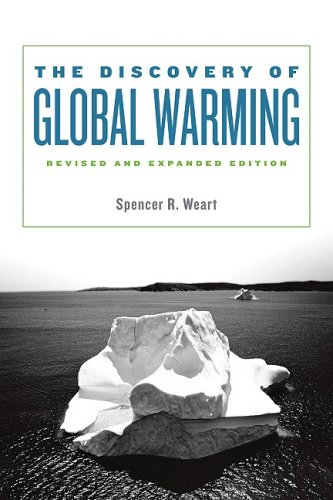 A common remark I make about climate change books I like is that “it wasn’t like a textbook”. I like non-fiction books that I can carry around and read cover-to-cover just like I would a novel. I like them to draw me in and catch my interest as if they were a suspenseful PD James or just a comfortable Maeve Binchy.
 I’ve
I’ve  There’s somewhat less of a problem when it comes to David Suzuki – after all, he’s not a former politician, he has more scientific training (a biology doctorate) than Gore, and according to a Reader’s Digest poll,
  ClimateSight