Cross-posted from NextGen Journal
As an aspiring climate scientist, I have read dozens of books about climate change over the past few years. Here are my all-time favourites, which I present with Unofficial Climate Change Book Awards. (Unfortunately, the prizes consist entirely of bragging rights.)
 Best Analysis of Future Scenarios
Climate Wars, by Gwynne Dyer
View on Amazon.com
Most of us are aware of how climate change will impact the world: more extreme weather, prolonged floods and droughts, dwindling glaciers and sea ice. In this book, renowned Canadian journalist and military historian Gwynne Dyer goes one step further, and explores how these physical impacts might affect geopolitical relations. Will India and Pakistan engage in nuclear warfare over clean water? Will the United States and Russia begin a “Colder War” over Arctic sovereignty? Many of the scenarios he writes about are, frankly, terrifying, and all have a frightening grain of plausibility to them. Read the full review
 Best Introduction to Climate Science
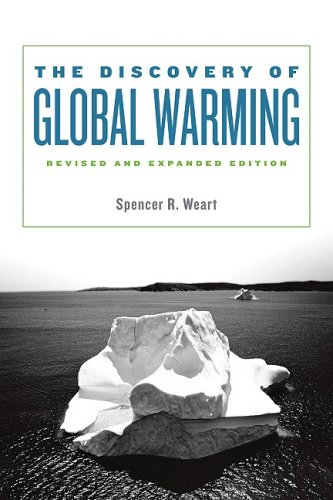
The Discovery of Global Warming, by Spencer Weart
View on Amazon.com
Scientists overwhelmingly agree that human-caused climate change is underway, but instead of simply stating this conclusion, Weart tells the story of how it was reached: tracing the theory from the 1800s to today. This innovative approach to science education, combined with Weart’s elegant prose, makes the book a joy to read. It doesn’t feel like a textbook, although it contains as much information as one. Read the full review
 Best Exposé
Climate Cover-Up, by James Hoggan and Richard Littlemore
View on Amazon.com
If scientists are so sure about the reality of anthropogenic climate change, why does so much of the public think that it’s natural/nonexistent/a global conspiracy? Why does the media present the issue as an equal-sided scientific debate? This confusion didn’t just happen by accident – it was deliberately constructed. Over the past two decades, lobby groups representing industries or ideologies that seek to delay action on climate change have engaged in a campaign to spread doubt about the reality of the problem. This book, rather than throwing around baseless accusations, methodically examines the paper trail of this widespread campaign. Reading Climate Cover-Up is an infuriating but absolutely necessary journey to take. Read the full review
 Best Policy Discussion
Storms of my Grandchildren, by Dr. James Hansen
View on Amazon.com
James Hansen is possibly the most prominent climate scientist alive today, and that title is well-deserved. Throughout his career at NASA, he has frequently made discoveries that were ahead of his time. Dr. Hansen is a very intrinsic scientist who doesn’t enjoy being in the spotlight or talking about policy, but he wrote this book for fear of his grandchildren looking back at his work and saying, “Opa understood what was happening, but he did not make it clear.” Although he couldn’t resist slipping in a few chapters about the current frontiers of climate science, the bulk of the book is about policy, featuring compelling arguments for expanded nuclear power, a moratorium on coal, and a rising price on carbon. Read the full review
 Best Canadian Focus
Keeping Our Cool, by Dr. Andrew Weaver
View on Amazon.com
Andrew Weaver is Canada’s top climate modeller, and a fantastic role model for science communication. This book gives a high-level, yet accessible, explanation of the mathematics of climate change – if you have some basic knowledge of calculus and statistics, you should be fine. However, what really makes this book stand out is its focus on Canadian climate journalism and politics, a rare quality in a field dominated by American research. We all know about George W. Bush’s track record of inaction, but what has Prime Minister Stephen Harper done (or not done)? High-profile studies exist on American media coverage of global warming, but how does the Canadian press compare? Read the full review
 Best Insider’s Account
Science as a Contact Sport, by Dr. Stephen Schneider
View on Amazon.com
The late Stephen Schneider, who unexpectedly died last summer of a heart attack, is a true pioneer of climate modelling. He has been active in the field since the 1970s, when computers became fast enough to handle mathematical models. This memoir explains what it’s like to be a climate scientist, and how that has changed over the years. In the 70s, Schneider and his colleagues filled their mind with purely analytical questions, but today, they have to deal with the media, politicians, and hate mail as well. Science used to just be about science, but now it’s about communication as well. Read the full review
 Most Gripping
Snowball Earth, by Gabrielle Walker
View on Amazon.com
Gabrielle Walker is a brilliant woman, as she possesses the ability to make a book about geology every bit as gripping as a murder mystery. Granted, Snowball Earth, a recent theory of climatic conditions during the Precambrian Era, is fascinating. In short, the continents were arranged in such a manner that the Earth would swing back and forth between “Snowball Earth” (frozen oceans and frozen land all over, even at the Equator) and “Hothouse Earth” (massive global warming from volcanic emissions of carbon dioxide). Until this period of massive climatic swings, the only thing that lived on Earth was unicellular goop…but immediately following the Snowball Earth cycles, complex life appeared. Many scientists don’t think this evolutionary timing was a coincidence. It’s possible that multicellular organisms, including us, only exist because of an accident of plate tectonics. Read the full review
If you would like to contest any of my decisions for these awards, please feel free to do so in the comments!


 ClimateSight