The Pendulum

Cross-posted from NextGen Journal

A few years ago, climate change mitigation became a major political issue. Before 2005, governments certainly knew that human-caused climate change was a serious problem – but the public knew next to nothing about it, so there was no incentive to act. However, between 2005 and 2007, a perfect storm of events splashed the reality of climate change onto the world stage.

The Kyoto Protocol, an international agreement to reduce greenhouse gas emissions, finally came into force in early 2005, after years of negotiation. The United States refused to sign, and Australia signed on a little late, but every other developed nation in the world agreed to emission targets. Here in Canada, the Liberal government enthusiastically pledged its support for Kyoto. My local newspaper ran editorials exploring the different ways we could meet our targets, through combinations of clean energy, green infrastructure, and efficiency standards.

The summer of 2005 was a wake-up call for the United States, as Hurricane Katrina mercilessly demonstrated the amount of damage that extreme weather can bring. It’s impossible to say, at least with our current technology, whether or not Katrina was caused or even worsened by a warming planet. However, such devastating storms will become the norm as climate change progresses. Scientists aren’t sure whether or not hurricanes will become more frequent in a warming world, but the average hurricane is expected to become stronger and more damaging, and we are already beginning to see this rise in storm intensity. Katrina gave us an example of what we can expect from climate change – even if it wasn’t a direct effect in itself – and the world was shocked by the suffering that ensued.

2006 marked the release of An Inconvenient Truth, Al Gore’s Academy Award-winning documentary about climate change. For scientists studying climate, the film was an admirable, up-to-date example of science communication, albeit with a few minor errors and oversimplifications. However, for citizens new to the issue (I particularly remember my classmates in grade 9 social studies discussing the film), An Inconvenient Truth was a disturbing reality check – scarier than any horror movie, because it was real.

The major scientific event of 2007 was a drastic, unexpected drop in Arctic summer sea ice. That season’s melt was exacerbated by coincidental weather conditions, so the next years weren’t quite as bad, but the trend was still worrying, to say the least. The research community had assumed that summer ice would stick around for at least a century, but this timescale was soon halved and quartered as ice melt exceeded even the worst projections.

By 2007, lead-up to the 2008 US presidential election was underway, and political awareness of climate change was obvious. It was no surprise that Democrat Barack Obama had ambitious plans to cut greenhouse gas emissions, but even the Republicans seemed to be on board. During his time in office, George W. Bush had insisted that, since climate change could be natural, any mitigating action was not worth the economic risk. Republican presidential candidates seemed to realize that continuing to adopt this attitude would be political suicide. The most extreme example, John McCain, who would eventually win the Republican presidential nomination, had emissions targets only slightly less extensive than Obama’s. As he said in 2007,

The world is already feeling the powerful effects of global warming, and far more dire consequences are predicted if we let the growing deluge of greenhouse gas emissions continue, and wreak havoc with God’s creation…The problem isn’t a Hollywood invention nor is doing something about it a vanity of Cassandra like hysterics. It is a serious and urgent economic, environmental and national security challenge.

However, McCain, once an author of a bill designed to cut greenhouse gas emissions, would soon completely change his stance. By 2010, he was asserting that cap-and-trade legislation was unnecessary and carbon dioxide posed no harm to the American people. He even went so far as to question the political motivations of science he once wholly accepted:

I think [global warming is] an inexact science, and there has been more and more questioning about some of the conclusions that were reached concerning climate change. And I believe that everybody in the world deserves correct answers whether the scientific conclusions were flawed by outside influences. There’s great questions about it that need to be resolved.

The story of John McCain isn’t too surprising. Politicians frequently base their statements on public sentiment rather than personal opinion. They say what people want to hear, rather than what they truly believe is important. This aspect of our political system is depressing, but persistent. The real question, though, regards what changed public sentiment so quickly. Why did politicians like McCain feel compelled to denounce the importance of action on this problem, or even the existence of the problem itself? What happened since 2007 that made the pendulum swing so far in the other direction?

Strike one was the economy. The global recession that began in 2008 was the largest since the Great Depression, and concern for all other problems promptly went down the drain. It’s understandable for citizens to not worry about the environment when they don’t even have the means to feed and clothe their children properly. However, for governments to not realize the long-term economic implications of allowing climate change to continue, along with the potential job-creating benefits of a new energy economy, was disappointing, even though it wasn’t surprising.

Strike two was the all-out war on climate science, spearheaded by the fossil fuel industry and the far right. This PR campaign has been underway since the early 1990s, but was kicked up a notch just over a year ago. Since public understanding of the causes and effects of global warming was growing, and the science was becoming more solid by the month, the PR tactics changed. Instead of attacking the science, they attacked the integrity of the scientists. The most extreme example occurred in November 2009, when private correspondence between top climate researchers was stolen, spread on the Internet, and spun in an attempt to cast doubt on the scientists’ motives. This event, known as “Climategate”, spurred a great deal of anger among the political right, and everything from bitter editorials to death threats against scientists ensued. Perhaps most distressingly, by the time investigations found that the scientists involved were innocent, and the reality of climate change untouched, Climategate was old news and media outlets failed to adequately follow up on the story. Citizens heard the accusations, but not the exonerations, so political will to cut greenhouse gas emissions slipped even further.

Strike three – well, there has been no strike three, and a good thing too. Strikes one and two were so bad that some are hoping the pendulum has swung as far as it can go. It’s certainly difficult to imagine how the situation could get worse. The Kyoto Protocol is set to expire next year, and the Copenhagen meetings failed to create a replacement. As it was, many developed nations failed to meet their targets, and the Canadian government backed out completely.

The possibility of federal climate legislation for the United States is laughable now that not a single Republican Senator thinks action is necessary, and most doubt the reality of the problem, choosing to believe that the entire scientific community is out to lunch and/or an agent of conspiracy. President Obama’s director of climate policy, Carol Browner, recently left her position, although none of her major goals had been met. Obama’s recent State of the Union address included lots of hopeful statements about clean energy, but absolutely no mention of climate change, as if merely acknowledging the most pressing reason for a new energy economy would be political suicide. The time-honoured tradition of saying what the public wants to hear has even reached Obama, the man who promised change.

In Canada, legislation to simply set targets for emission reduction passed the House of Commons (made of elected representatives), but the Senate (composed of appointed politicians) chose to use their newfound Conservative majority to strike down the bill with no debate whatsoever, in a blatantly undemocratic move that has not happened since the 1930s. The Canadian government is all for a new energy economy, but not one based on environmental and social responsibility. The Alberta tar sands, which are substantially more polluting and carbon-intensive than traditional oil, continue to expand, and both federal and provincial governments are worryingly enthusiastic.

From 2005 to 2007, politics was high on promises of mitigation, but low on delivery. Since then, it has been devoid of both. It’s starting to seem as if it will take a major global disaster that can be unquestionably tied to climate change for governments to get their act together.

This would all be very well if there was no lag time between cause and effect in the climate system, but it doesn’t work that way. It takes several decades for all the warming in the pipeline to show up. If we waited until climate change became unbearable, and then cut off our emissions completely, the situation would still get worse for decades before it stabilized.

The worldwide failure of governments to take action on climate change is baffling. It seems that the best they can do is occasionally promise to fix the problem, but never actually get started. If this continues for much longer, we’re all going to pay the price for their mistakes – and so will people for generations to come.

The Unofficial Climate Change Book Awards

Cross-posted from NextGen Journal

As an aspiring climate scientist, I have read dozens of books about climate change over the past few years. Here are my all-time favourites, which I present with Unofficial Climate Change Book Awards. (Unfortunately, the prizes consist entirely of bragging rights.)


Best Analysis of Future Scenarios
Climate Wars, by Gwynne Dyer
View on Amazon.com

Most of us are aware of how climate change will impact the world: more extreme weather, prolonged floods and droughts, dwindling glaciers and sea ice. In this book, renowned Canadian journalist and military historian Gwynne Dyer goes one step further, and explores how these physical impacts might affect geopolitical relations. Will India and Pakistan engage in nuclear warfare over clean water? Will the United States and Russia begin a “Colder War” over Arctic sovereignty? Many of the scenarios he writes about are, frankly, terrifying, and all have a frightening grain of plausibility to them. Read the full review


Best Introduction to Climate Science
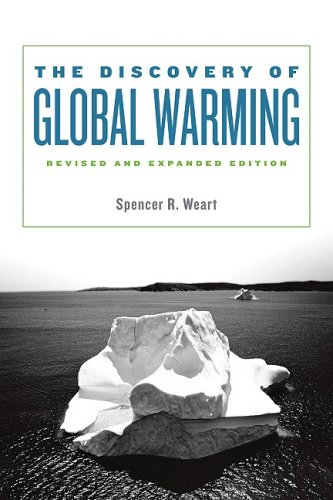
The Discovery of Global Warming, by Spencer Weart
View on Amazon.com

Scientists overwhelmingly agree that human-caused climate change is underway, but instead of simply stating this conclusion, Weart tells the story of how it was reached: tracing the theory from the 1800s to today. This innovative approach to science education, combined with Weart’s elegant prose, makes the book a joy to read. It doesn’t feel like a textbook, although it contains as much information as one. Read the full review


Best Exposé
Climate Cover-Up, by James Hoggan and Richard Littlemore
View on Amazon.com

If scientists are so sure about the reality of anthropogenic climate change, why does so much of the public think that it’s natural/nonexistent/a global conspiracy? Why does the media present the issue as an equal-sided scientific debate? This confusion didn’t just happen by accident – it was deliberately constructed. Over the past two decades, lobby groups representing industries or ideologies that seek to delay action on climate change have engaged in a campaign to spread doubt about the reality of the problem. This book, rather than throwing around baseless accusations, methodically examines the paper trail of this widespread campaign. Reading Climate Cover-Up is an infuriating but absolutely necessary journey to take. Read the full review


Best Policy Discussion
Storms of my Grandchildren, by Dr. James Hansen
View on Amazon.com

James Hansen is possibly the most prominent climate scientist alive today, and that title is well-deserved. Throughout his career at NASA, he has frequently made discoveries that were ahead of his time. Dr. Hansen is a very intrinsic scientist who doesn’t enjoy being in the spotlight or talking about policy, but he wrote this book for fear of his grandchildren looking back at his work and saying, “Opa understood what was happening, but he did not make it clear.” Although he couldn’t resist slipping in a few chapters about the current frontiers of climate science, the bulk of the book is about policy, featuring compelling arguments for expanded nuclear power, a moratorium on coal, and a rising price on carbon. Read the full review


Best Canadian Focus
Keeping Our Cool, by Dr. Andrew Weaver
View on Amazon.com

Andrew Weaver is Canada’s top climate modeller, and a fantastic role model for science communication. This book gives a high-level, yet accessible, explanation of the mathematics of climate change – if you have some basic knowledge of calculus and statistics, you should be fine. However, what really makes this book stand out is its focus on Canadian climate journalism and politics, a rare quality in a field dominated by American research. We all know about George W. Bush’s track record of inaction, but what has Prime Minister Stephen Harper done (or not done)? High-profile studies exist on American media coverage of global warming, but how does the Canadian press compare? Read the full review


Best Insider’s Account
Science as a Contact Sport, by Dr. Stephen Schneider
View on Amazon.com

The late Stephen Schneider, who unexpectedly died last summer of a heart attack, is a true pioneer of climate modelling. He has been active in the field since the 1970s, when computers became fast enough to handle mathematical models. This memoir explains what it’s like to be a climate scientist, and how that has changed over the years. In the 70s, Schneider and his colleagues filled their mind with purely analytical questions, but today, they have to deal with the media, politicians, and hate mail as well. Science used to just be about science, but now it’s about communication as well. Read the full review


Most Gripping
Snowball Earth, by Gabrielle Walker
View on Amazon.com

Gabrielle Walker is a brilliant woman, as she possesses the ability to make a book about geology every bit as gripping as a murder mystery. Granted, Snowball Earth, a recent theory of climatic conditions during the Precambrian Era, is fascinating. In short, the continents were arranged in such a manner that the Earth would swing back and forth between “Snowball Earth” (frozen oceans and frozen land all over, even at the Equator) and “Hothouse Earth” (massive global warming from volcanic emissions of carbon dioxide). Until this period of massive climatic swings, the only thing that lived on Earth was unicellular goop…but immediately following the Snowball Earth cycles, complex life appeared. Many scientists don’t think this evolutionary timing was a coincidence. It’s possible that multicellular organisms, including us, only exist because of an accident of plate tectonics. Read the full review


If you would like to contest any of my decisions for these awards, please feel free to do so in the comments!

Snowstorms and Sea Ice

Cross-posted from NextGen Journal

“That’s some global warming”, Fox News proudly announced. “Rare winter storm dumps several inches of snow across South.” It’s cold outside, and/or it’s snowing, so therefore global warming can’t be happening. Impeccable logic, or rampant misconception?

It happened last winter, and again so far this season: unusual snow and extreme cold thrashed the United States, Europe, and Russia. Climate change deniers, with a response as predictable as Newton’s Laws, trumpeted the conditions as undeniable proof that the world simply could not be warming. Even average people, understandably confused by conflicting media reports, started to wonder if global warming was really such a watertight theory.

But sit and think about it for a minute. If it’s cold right now in the place where you live, that doesn’t mean it’s cold everywhere else. It’s simply not possible to look at your little corner of the world and extrapolate those conditions to the entire planet. There’s a reason it’s called global warming, and not “everywhere-all-the-time warming”. Climate change increases the amount of thermal energy on our planet, but that doesn’t mean the extra energy will be distributed equally.

That said, an interesting weather condition has been prominent over the past month, telling a fascinating story that begins in the Arctic. At the recent American Geophysical Union conference in San Fransisco, the largest annual gathering of geoscientists in the world, NOAA scientist Jim Overland described the situation.

Usually in winter, the air masses above the Arctic have low pressure, and the entire area is surrounded by a circular vortex of wind currents, keeping the frigid polar air contained. Everything is what you’d expect: a cold Arctic and mild continents. These conditions are known as the positive phase of the North Atlantic Oscillation (NAO), an index of fluctuating wind and temperature patterns that impacts weather on both sides of the Atlantic.

The negative phase is different, and quite rare: high pressure over the Arctic forces the cold air to spill out over North America and Eurasia, allowing warm air to rush in to the polar region. Meteorologist Jeff Masters has a great analogy for a negative NAO: it’s “kind of like leaving the refrigerator door ajar–the refrigerator warms up, but all of the cold air spills out into the house.” The Arctic becomes unusually warm, and the temperate regions of the surrounding continents become unusually cold. Nobody visually depicts this pattern better than freelance journalist Peter Sinclair:

So what’s been causing this rare shift to the negative NAO the past two winters? In fact, global warming itself could easily be the culprit. Strong warming over the Arctic is melting the sea ice, not just in the summer, but year-round. Open water in the Arctic Ocean during the winter allows heat to flow from the ocean to the atmosphere, creating the high pressure needed for a negative NAO to materialize. Paradoxically, the cold, snowy weather many of us are experiencing could be the result of a warming planet.

An emerging debate among scientists questions which force will win out over winters in Europe and North America: the cooling influence of more negative NAO conditions, or the warming influence of climate change itself? A recent study in the Journal of Geophysical Research predicts a threefold increase in the likelihood of cold winters over “large areas including Europe” as global warming develops. On the other hand, scientists at GISS, the climate change team at NASA, counter that extreme lows in sea ice over the past decade have not always led to cold winters in Europe, as 7 out the past 10 winters there have been warmer than average.

Amid this new frontier in climate science, one thing is virtually certain: global warming has not stopped, despite what Fox News tells you. In fact, despite localized record cold, 2010 is expected to be either the warmest year on record or tied for first with 2005 (final analysis is not yet complete). What you see in your backyard isn’t always a representative sample.

Merchants of Doubt

I waited a long time to read this book – in retrospect, too long. I have long been a fan of Naomi Oreskes; I believe she is a brilliant and sensible scientist with a compelling way with words. On the other hand, nothing depresses me more quickly than reading about those who deliberately spread confusion on climate change for political reasons. After a particularly battering year for climate science in the public eye, I want to make sure I stay sane.

However, Merchants of Doubt: How a Handful of Scientists Obscured the Truth on Issues from Tobacco Smoke to Global Warming, by Naomi Oreskes and Erik Conway, was oddly comforting. How could it be so, you might ask, given the subject matter?

It’s a good question. The book traces several key players, such as Frederick Seitz, S. Fred Singer, Bill Nierenberg, and Robert Jastrow, in their fight against mainstream science. Many of them were physicists in the era of atomic bomb development, and nearly all had been deeply influenced by the Cold War – they were anti-Communist to the point of extremism.

This extremism soon extended into science: any new discovery that seemed to necessitate government action was vehemently attacked by Seitz et al. Whether it was the harmful health effects of smoking, second-hand smoking, or DDT, and the existence of anthropogenic acid rain, ozone depletion, or climate change, the same people used the same strategies to sow doubt in the public mind, delaying the cry for action. The algorithm was relatively simple:

  • construct arguments against the phenomenon, which scientists had already addressed and ruled out
  • widely publish these arguments in the popular press, rather than scientific journals
  • demand that the mainstream media be neutral and provide “equal time” for their side of the so-called controversy
  • attack the professional integrity of the scientists who discovered and studied the phenomenon; label them as frauds and/or Communists
  • claim that action on this issue would be the beginning of the “slippery slope to socialism”

It’s enough to anger anyone who has the least bit of sympathy for science. The authors say it best:

Why would scientists dedicated to uncovering the truth about the natural world deliberately misrepresent the work of their own colleagues? Why would they spread accusations with no basis? Why would they refuse to correct their arguments once they had been shown to be incorrect? And why did the press continue to quote them, year after year, even as their claims were shown, one after another, to be false?

History repeated itself many times over, within the course of just a few decades. The attack against climate science that we are currently witnessing is just a larger-scale rehash of the pro-industry, anti-Communist fight against epidemiology, environmental chemistry, and so on. Until now, few attempts have been made to connect the dots, but Oreskes and Conway present a watertight and compelling thesis in Merchants of Doubt.

The hopeful part came when I realized this: all of the previous issues that Seitz et al attempted to discredit were eventually addressed, more or less successfully, by the government, even if some of the public is still confused about the science. Restrictions and regulations on smoking, along with education regarding its harms, has made tobacco use a semi-stigmatized practice in my generation, rather than a near-universal activity. The Montreal Protocol was largely a success, and stratospheric ozone is on the rise. The world, at least so far, has managed to avoid nuclear warfare.

Climate change is undoubtedly a more inevitable and wide-ranging problem, as it strikes at the heart of our fossil-fuel based economy, and will probably surpass, both in rate and magnitude, any change our species has seen in the global environment. However, since the attack against climate science has tracked so closely with previous campaigns, I can’t help but hope it will eventually end the same way: with the public and the government realizing the problem and employing effective measures to address it. I know it’s probably not very scientific of me to make this connection, but hope doesn’t have to be rational to be effective.

Storms of my Grandchildren

I hope everyone had a fun and relaxing Christmas. Here’s a book I’ve been meaning to review for a while.

The worst part of the recent book by NASA climatologist James Hansen is, undoubtedly, the subtitle. The truth about the coming climate catastrophe and our last chance to save humanity – really? That doesn’t sound like the intrinsic, subdued style of Dr. Hansen. In my opinion, it simply alienates the very audience we’re trying to reach: moderate, concerned non-scientists.

The inside of the book is much better. While he couldn’t resist slipping in a good deal of hard science (and, in my opinion, these were the best parts), the real focus was on climate policy, and the relationship between science and policy. Hansen struggled with the prospect of becoming involved in policy discussions, but soon realized that he didn’t want his grandchildren, years from now, to look back at his work and say, “Opa understood what was happening, but he did not make it clear.”

Hansen is very good at distinguishing between his scientific work and his opinions on policy, and makes no secret of which he would rather spend time on. “I prefer to just do science,” he writes in the introduction. “It’s more pleasant, especially when you are having some success in your investigations. If I must serve as a witness, I intend to testify and then get back to the laboratory, where I am comfortable. That is what I intend to do when this book is finished.”

Hansen’s policy opinions centre on a cap-and-dividend system: a variant of a carbon tax, where revenue is divided evenly among citizens and returned to them. His argument for a carbon tax, rather than cap-and-trade, is compelling, and certainly convinced me. He also advocates the expansion of nuclear power (particularly “fourth-generation” fast nuclear reactors), a moratorium on new coal-generated power plants, and drastically improved efficiency measures.

These recommendations are robust, backed up with lots of empirical data to argue why they would be our best bet to minimize climate change and secure a stable future for generations to come. Hansen is always careful to say when he is speaking as a scientist and when he is speaking as a citizen, and provides a fascinating discussion of the connection between these two roles. As Bill Blakemore from ABC television wrote in correspondence with Hansen, “All communication is biased. What makes the difference between a propagandist on one side and a professional journalist or scientist on the other is not that the journalist or scientist ‘set their biases aside’ but that they are open about them and constantly putting them to the test, ready to change them.”

Despite all this, I love when Hansen puts on his scientist hat. The discussions of climate science in this book, particularly paleoclimate, were gripping. He explains our current knowledge of the climatic circumstances surrounding the Permian-Triassic extinction and the Paleocene-Eocene Thermal Maximum (usually referred to as the PETM). He explains why neither of these events is a suitable analogue for current climate change, as the current rate of introduction of the radiative forcing is faster than anything we can see in the paleoclimatic record.

Be prepared for some pretty terrifying facts about our planet’s “methane hydrate gun”, and how it wasn’t even fully loaded when it went off in the PETM. Also discussed is the dependence of climate sensitivity on forcing: the graph of these two variables is more or less a parabola, as climate sensitivity increases both in Snowball Earth conditions and in Runaway Greenhouse conditions. An extensive discussion of runaway greenhouse is provided, where the forcing occurs so quickly that negative feedbacks don’t have a chance to act before the positive water vapour feedback gets out of control, the oceans boil, and the planet becomes too hot for liquid water to exist. For those who are interested in this scenario, Hansen argues that, if we’re irresponsible about fossil fuels, it is quite possible for current climate change to reach this stage. For those who have less practice separating the scientific part of their brain from the emotional part, I suggest you skip this chapter.

I would recommend this book to everyone interested in climate change. James Hansen is such an important player in climate science, and has arguably contributed more to our knowledge of climate change than just about anyone. Whether it’s for the science, for the policy discussions, or for his try at science fiction in the last chapter, it’s well worth the cover price.

Thoughts from others who have read this book are welcome in the comments, as always.

The Real Story of Climategate

A year ago today, an unidentified hacker published a zipped folder in several locations online. In this folder were approximately one thousand emails and three thousand files which had been stolen from the backup server of the Climatic Research Unit in the UK, a top centre for global temperature analysis and climate change studies. As links to the folder were passed around on blogs and online communities, a small group of people sorted through the emails, picking out a handful of phrases that could be seen as controversial, and developing a narrative which they pushed to the media with all their combined strength. “A lot is happening behind the scenes,” one blog administrator wrote. “It is not being ignored. Much is being coordinated among major players and the media. Thank you very much. You will notice the beginnings of activity on other sites now. Here soon to follow.”

This was not the work of a computer-savvy teenager that liked to hack security systems for fun. Whoever the thief was, they knew what they were looking for. They knew how valuable the emails could be in the hands of the climate change denial movement.

Skepticism is a worthy quality in science, but denial is not. A skeptic will only accept a claim given sufficient evidence, but a denier will cling to their beliefs regardless of evidence. They will relentlessly attack arguments that contradict their cause, using talking points that are full of misconceptions and well-known to be false, while blindly accepting any argument that seems to support their point of view. A skeptic is willing to change their mind. A denier is not.

There are many examples of denial in our society, but perhaps the most powerful and pervasive is climate change denial. We’ve been hearing the movement’s arguments for years, ranging from illogic (“climate changed naturally in the past, so it must be natural now“) to misrepresentation (“global warming stopped in 1998“) to flat-out lies (“volcanoes emit more carbon dioxide than humans“). Of course, climate scientists thought of these objections and ruled them out long before you and I even knew what global warming was, so in recent years, the arguments of deniers were beginning to reach a dead end. The Copenhagen climate summit was approaching, and the public was beginning to understand the basic science of human-caused climate change, even realize that the vast majority of the scientific community was concerned about it. A new strategy for denial and delay was needed – ideally, for the public to lose trust in researchers. Hence, the hack at CRU, and the beginning of a disturbing new campaign to smear the reputations of climate scientists.

The contents of the emails were spun in a brilliant exercise of selective quotation. Out of context, phrases can be twisted to mean any number of things – especially if they were written as private correspondence with colleagues, rather than with public communication in mind. Think about all the emails you have sent in the past decade. Chances are, if someone tried hard enough, they could make a few sentences you had written sound like evidence of malpractice, regardless of your real actions or intentions.

Consequently, a mathematical “trick” (clever calculation) to efficiently analyse data was reframed as a conspiracy to “trick” (deceive) the public into believing the world was warming. Researchers discussed how to statistically isolate and “hide the decline” in problematic tree ring data that was no longer measuring what it used to, but this quote was immediately twisted to claim that the decline was in global temperatures: the world is cooling and scientists are hiding it from us!

Other accusations were based not on selective misquotation but on a misunderstanding of the way science works. When the researchers discussed what they felt were substandard papers that should not be published, many champions of the stolen emails shouted accusations that scientists were censoring their critics, as if all studies, no matter how weak their arguments, had a fundamental right to be published. Another email, in which a researcher privately expressed a desire to punch a notorious climate change denier, was twisted into an accusation that the scientists threatened people who disagreed with them. How was it a threat if the action was never intended to materialize, and if the supposed target was never aware of it?

These serious and potentially damaging allegations, which, upon closer examination, are nothing more than grasping at straws, were not carefully examined and evaluated by journalists – they were repeated. Early media reports bordered on the hysterical. With headlines such as “The final nail in the coffin of anthropogenic global warming” and “The worst scientific scandal of our generation“, libelous claims and wild extrapolations were published mere days after the emails were distributed. How could journalists have possibly had time to carefully examine the contents of one thousand emails? It seems much more likely that they took the short-cut of repeating the narrative of the deniers without assessing its accuracy.

Even if, for the sake of argument, all science conducted by the CRU was fraudulent, our understanding of global warming would not change. The CRU runs a global temperature dataset, but so do at least six other universities and government agencies around the world, and their independent conclusions are virtually identical. The evidence for human-caused climate change is not a house of cards that will collapse as soon as one piece is taken away. It’s more like a mountain: scrape a couple of pebbles off the top, but the mountain is still there. For respected newspapers and media outlets to ignore the many independent lines of evidence for this phenomenon in favour of a more interesting and controversial story was blatantly irresponsible, and almost no retractions or apologies have been published since.

The worldwide media attention to this so-called scandal had a profound personal impact on the scientists involved. Many of them received death threats and hate mail for weeks on end. Dr. Phil Jones, the director of CRU, was nearly driven to suicide. Another scientist, who wishes to remain anonymous, had a dead animal dumped on his doorstep and now travels with bodyguards. Perhaps the most wide-reaching impact of the issue was the realization that private correspondence was no longer a safe environment. This fear only intensified when the top climate modelling centre in Canada was broken into, in an obvious attempt to find more material that could be used to smear the reputations of climate scientists. For an occupation that relies heavily on email for cross-national collaboration on datasets and studies, the pressure to write in a way that cannot be taken out of context – a near-impossible task – amounts to a stifling of science.

Before long, the investigations into the contents of the stolen emails were completed, and one by one, they came back clear. Six independent investigations reached basically the same conclusion: despite some reasonable concerns about data archival and sharing at CRU, the scientists had shown integrity and honesty. No science had been falsified, manipulated, exaggerated, or fudged. Despite all the media hullabaloo, “climategate” hadn’t actually changed anything.

Sadly, by the time the investigations were complete, the media hullabaloo had died down to a trickle. Climategate was old news, and although most newspapers published stories on the exonerations, they were generally brief, buried deep in the paper, and filled with quotes from PR spokespeople that insisted the investigations were “whitewashed”. In fact, Scott Mandia, a meteorology professor, found that media outlets devoted five to eleven times more stories to the accusations against the scientists than they devoted to the resulting exonerations of the scientists.

Six investigations weren’t enough, though, for some stubborn American politicians who couldn’t let go of the article of faith that Climategate was proof of a vast academic conspiracy. Senator James Inhofe planned a McCarthy-like criminal prosecution of seventeen researchers, most of whom had done nothing more than occasionally correspond with the CRU scientists. The Attorney General of Virginia, Ken Cuccinelli, repeatedly filed requests to investigate Dr. Michael Mann, a prominent paleoclimatic researcher, for fraud, simply because a twelve-year-old paper by Mann had some statistical weaknesses. Ironically, the Republican Party, which prides itself on fiscal responsibility and lower government spending, continues to advocate wasting massive sums of money conducting inquiries which have already been completed multiple times.

Where are the politicians condemning the limited resources spent on the as yet inconclusive investigations into who stole these emails, and why? Who outside the scientific community is demanding apologies from the hundreds of media outlets that spread libelous accusations without evidence? Why has the ongoing smear campaign against researchers studying what is arguably the most pressing issue of our time gone largely unnoticed, and been aided by complacent media coverage?

Fraud is a criminal charge, and should be treated as such. Climate scientists, just like anyone else, have the right to be presumed innocent until proven guilty. They shouldn’t have to endure this endless harassment of being publicly labelled as frauds without evidence. However, the injustice doesn’t end there. This hate campaign is a dangerous distraction from the consequences of global climate change, a problem that becomes more difficult to solve with every year we delay. The potential consequences are much more severe, and the time we have left to successfully address it is much shorter, than the vast majority of the public realizes. Unfortunately, powerful forces are at work to keep it that way. This little tussle about the integrity of a few researchers could have consequences millennia from now – if we let it.

Update: Many other climate bloggers are doing Climategate anniversary pieces. Two great ones I read today were Bart Verheggen’s article and the transcript of John Cook’s radio broadcast. Be sure to check them out!

What If…?

Cross-posted from NextGen Journal

Let’s start with the obvious – the U.S. midterm elections are upon us, and it’s quite likely that the Republicans will win a majority. (My American friends tell me that this is possible even with Barack Obama remaining president. Please bear with my limited knowledge of the American political system. It works very differently in Canada.)

I’m not going to comment on partisan issues – health care, immigration, economic stimulus. What I am here to talk about is an issue that should not be partisan, but has become partisan regardless: science, specifically climate science.

Climate change is not a theory – it is the logical result of several theories, based in physics and chemistry, that scientists have understood since the 1800s. What’s political about that? Exactly what part of the equation dF = 5.35 ln(C/Co) is an opinion that differs based on ideological factors?

The political part comes when we ask the question, “What do we do to stop climate change?” A carbon tax? Cap-and-trade? Regulation? Some of these solutions are more liberal or conservative than others. The only decision that doesn’t adhere to U.S. politics is to do nothing. Absence of action is a decision in itself, and the overwhelming scientific evidence (based not just on computer models, but also observations of past climate changes) shows us that doing nothing will allow this problem to spiral out of control, causing damages that no amount of money will be able to repair. What U.S. party advocates leaving that kind of world to their grandchildren? As Bill McKibben says, you wouldn’t expect it to be the Republicans:

If there was ever a radical project, monkeying with the climate would surely qualify. Had the Soviet Union built secret factories to pour carbon dioxide into the atmosphere and threatened to raise the sea level and subvert the Grain Belt, the prevailing conservative response would have been: Bomb them. Bomb them back to the Holocene—to the 10,000-year period of climatic stability now unraveling, the period that underwrote the rise of human civilization that conservatism has taken as its duty to protect. Conservatism has always stressed stability and continuity; since Burke, the watchwords have been tradition, authority, heritage. The globally averaged temperature of the planet has been 57 degrees, give or take, for most of human history; we know that works, that it allows the world we have enjoyed. Now, the finest minds, using the finest equipment, tell us that it’s headed toward 61 or 62 or 63 degrees unless we rapidly leave fossil fuel behind, and that, in the words of NASA scientists, this new world won’t be “similar to that on which civilization developed and to which life on earth is adapted.” Conservatives should be leading the desperate fight to preserve the earth we were born on.

But they’re not. Instead, many are choosing a psychological easy way out: if every solution seems imperfect, deny that the problem exists. Out of all the Republican contenders for the Senate, none support action on climate change, and most deny the existence of anthropogenic global warming.

It is questionable whether all of these statements are sincere. Politicians, after all, will say whatever they need to say to get elected. If these Republicans feel that their voting base denies climate change, they will adjust their public statements accordingly. Look at John McCain – during the 2008 presidential election, his promises for clean energy were nearly as strong as Obama’s. Now, he rejects cap-and-trade, and views the anthropogenic cause of climate change in the Arctic as an “opinion”.

Admittedly, a new, but growing, segment of the Republican voting base overwhelmingly denies climate change. As the New York Times reports, Tea Party supporters have all kinds of convoluted arguments against a field of science they know virtually nothing about. It contradicts “the preaching of Rush Limbaugh and the teaching of Scripture”, and it could be caused by “the normal cycles of nature” (whatever those are), so thousands of scientists spending their lives studying this problem must be missing something. Or they could be part of a massive conspiracy.

Republican candidates are catering to the extreme segments of their party, and, arguably, to their party as a whole. However, their plans to base action (or lack thereof) on the fervent hope that the scientific community is out to lunch may alienate voters who understand what a risk that would be.

Or so we hope. If Republicans get their way, climate science will not just be disregarded: the men and women who study it will be criminally investigated, for no reason other than that their research supports the existence of anthropogenic climate change. And since James Inhofe can’t find any gaping holes in the math, that means the scientists must be fraudulent, right?

The Republican Party also hopes to conduct yet another investigation into the private correspondence of scientists, stolen and distributed a year ago. Although these emails show that climate scientists are not always very nice, it does not undermine one iota of our understanding of the climate system, as five independent investigations have concluded. But that’s not the answer Republican officials want, so they will waste taxpayers’ money and researchers’ time with their own investigation. Kind of hypocritical for a party that promises fiscal responsibility.

I’m a Canadian. I don’t get a vote in this election. I am also eighteen years old. I, unlike most Republican Senators, will be around to witness the effects of climate change. We have wasted twenty years in the fight against climate change, and if we continue to let petty politics and finger-pointing delay us more, the whole world will suffer.

It’s no secret that American politics disproportionately influence the world. The same is true for American emissions of greenhouse gases, and American agreements to reduce these emissions, and American patterns of energy use and energy sources. So please, when you go to vote this week, think about not just yourself and your country but other young people and other countries too.

And please vote. I’ll leave you with some wise words from Seth Godin:

If you don’t vote because you’re trying to teach politicians a lesson, you’re tragically misguided in your strategy. The very politicians you’re trying to send a message to don’t want you to vote.

Voting is free. It’s fairly fast. It doesn’t make you responsible for the outcome, but it sure has an impact on what we have to live with going forward. The only thing that would make it better is free snacks.

Even if you’re disgusted, vote. Vote for your least unfavorite choice. But go vote.

Be Critical of Critics

Cross-posted from NextGen Journal

Of all the inane arguments made against the phenomenon of anthropogenic global climate change, the strangest – in my opinion – are the conspiracy theories.

Yes, scientific fraud does happen, but on the scale of one author, not an entire multi-disciplinary field stretching back for over a century. Imagine the scale of fabrication that would be necessary for this to be true, and the amount of journal editors, expert reviewers, and students who would have to be in on the conspiracy. Scientists are just not that organized.

And for what reason would they do this? Yes, there’s the old Communist-overthrow-of-the-world argument that Fox News pundits argue would somehow result from using capitalist market strategies to put a price on carbon…but many scientists who fully accept the reality of climate change are self-proclaimed Independents and Republicans.

Even if they don’t claim out-and-out fraud, many politicians, journalists, and citizens believe that scientists’ conclusions on climate change are influenced by the lure of grant money. This position shows a fundamental misunderstanding of the way scientific grants work. As Dr. Andrew Weaver, top Canadian climatologist, argued in his fantastic book Keeping Our Cool: Canada in a Warming World, if scientists were purely interested in grant money, it would be more beneficial for them to claim uncertainty in their work. Research dollars give preference to areas of science that remain fundamentally mysterious, not those that are just ironing out the details of well-understood basic processes. Additionally, as meteorology professor Scott Mandia recently showed, the grants that scientists receive for their research don’t actually influence their salaries.

Incredibly, even the Intergovernmental Panel on Climate Change (IPCC) – a highly credible organization that painstakingly summarizes the scientific literature on climate change – is comprised of volunteer scientists. Even the chair, Rajendra Pachauri, doesn’t receive a cent for his work with the IPCC.

Of course, the prospect of a global warming fraud isn’t impossible. Nothing is. But remember, fraud is a criminal charge, and should not be thrown around lightly. Climate scientists, just like anyone else, have the right to be presumed innocent until proven guilty. They shouldn’t have to endure this endless harassment of being publicly labelled as frauds without evidence.

Here’s an example, from a retired American physics prof named Harold Lewis. He recently resigned from the American Physical Society because he didn’t think his views on climate change were being taken into account in the society’s statement. His resignation letter reads almost like satire:

It is of course, the global warming scam, with the (literally) trillions of dollars driving it, that has corrupted so many scientists, and has carried APS before it like a rogue wave. It is the greatest and most successful pseudoscientific fraud I have seen in my long life as a physicist. Anyone who has the faintest doubt that this is so should force himself to read the ClimateGate documents, which lay it bare…I don’t believe that any real physicist, nay scientist, can read that stuff without revulsion. I would almost make that revulsion a definition of the word scientist.

The scientists involved in ClimateGate, the scandal that wasn’t, have been cleared by five independent investigations to date. While some reasonable issues about data archival and sharing have been raised, absolutely no science was compromised by the contents of the stolen private correspondence. For Lewis to say otherwise and fail to provide evidence for this potentially libelous accusation is unduly irresponsible.

I disagree that the definition of scientist is “someone who feels revulsion and jumps to the conclusion of fraud from emails that show, at most, that climate scientists are not always very nice”. On the contrary, I would expect that a scientist would assess media coverage of these emails with a critical eye, examine the context in which they were written, and read the published work of the scientists in question – many of the so-called damning phrases (“hide the decline”, “lack of warming at the moment”) had already been discussed at length in the literature (Briffa et al 1997 and Trenberth et al 2009 respectively).

On a side note, where did he get “literally trillions of dollars” from? The world GDP, according to the World Bank, is approximately $61 trillion. It seems staggering to imagine that a minimum of 3% of the world economy is devoted to climate change research alone.

Let’s see what else Harry Lewis has to say:

In the interim the ClimateGate scandal broke into the news, and the machinations of the principal alarmists were revealed to the world. It was a fraud on a scale I have never seen, and I lack the words to describe its enormity. Effect on the APS position: none. None at all.

And rightly so. Even if, for the sake of argument, the CRU emails had discredited all of the research group’s data and publications, their conclusions about the current planetary warming have been independently replicated by multiple land- and satellite- based databases. In the United States alone, there is NASA GISS, NOAA NCDC, RSS, and UAH. All show the same global warming that CRU detected. Some, due to complexities in the measurement of Arctic temperatures, show even more.

The scientific literature fully supports the general premise of the APS statement on climate change: the world is warming, humans are causing it, and unless we reduce carbon emissions quickly and dramatically, it’s going to be bad. No alternative explanation for the situation has been able to withstand the scrutiny of peer-review.

Science is about looking at all sides of an issue, but it’s not a free-for-all. If someone can’t back up a claim, they don’t have an inherent right to get it published regardless. Unfortunately, in the Internet age, that doesn’t matter – if what they’re looking for is media attention, not scientific accountability.

There’s a difference between “lacking the words to describe the enormity” of a so-called fraud, and lacking the evidence to support such an accusation. As scientists (and prospective scientists, such as myself!), we need to be critical in our assessment of all claims – including the claims of critics and contrarians. Being objective isn’t always the same as being neutral.

Party Line

Brad Johnson from The Wonk Room recently released a comprehensive list of what Republican contenders for the U.S. Senate understand about climate change, inferred from their public statements. The result? 47 of the 48 deny the existence of anthropogenic climate change and/or oppose mitigating action to curb greenhouse gas emissions.

Take a look – many of the statements are what you would expect from trolling YouTube commenters, not politicians aspiring to run the most powerful country in the world. Through a combination of framing science as personal opinion, promoting artificial balance, and re-iterating the same misconceptions that people like you and I have been fighting to correct for years now, the Republican party has adopted a position that, frankly, terrifies me.

“There are dramatic environmental changes happening the Arctic region – whether one believes they are man-made or natural.” – John McCain, Arizona

“While I think the earth is warming, I don’t think that man-made causes are the primary factor.” – Ken Buck, Colorado

“The climate is always changing. The climate is never static. The question is whether it’s caused by man-made activity and whether it justifies economically destructive government regulation.” -Marco Rubio, Florida

“[Scientists] are making up their facts to fit their conclusions. They’ve already caught them doing this.” – Rand Paul, Kentucky

“There isn’t any real science to say we are altering the climate path of the Earth.” -Roy Blunt, Missouri

“I don’t buy into the whole man-caused global warming, man-caused climate change mantra of the left. I believe that there’s not sound science to back that up.” -Sharron Angle, Nevada

“There is much debate in the scientific community as to the precise sources of global warming.” -Pat Toomey, Pennsylvania

“It’s going to keep snowing in DC until Al Gore cries ‘uncle’.” -Jim DeMint, South Carolina

“If you have one volcano in the world, that one volcano puts out more carbon dioxide than everything man puts out.” -John Raese, West Virginia

“I absolutely do not believe that the science of man-caused climate change is proven. Not by any stretch of the imagination. I think it’s far more likely that it’s just sunspot activity, or something just in the geologic eons of time where we have changes in the climate.” -Ron Johnson, Wisconsin

Who are these people to make statements about what the scientific community knows and does not know about climate change, when organizations like the NAS are quite capable of doing that themselves, and tell a very different story to these prospective Senators when they do?

Who are they to make informal analyses on the attribution of recent temperature change – assessing the likelihood of different causes via gut instinct, rather than looking at fingerprints like stratospheric temperature and tropopause height?

Who are they to spread around blatant mistruths like “a single volcano puts out more CO2 than people do”? Who are they to make damaging accusations about scientific fraud and false data, especially when these accusations have already been investigated multiple times, coming up completely clear?

I had hoped that politicians would be slightly more informed than the general public on scientific matters that have implications for policy. However, I must now change my mind, and hope instead that the American public realizes how off the mark this position is. If they don’t, there could be consequences up to millenia from now.

What Kevin Trenberth Has to Say

A comment from Steve Bloom several months ago got me thinking about a new kind of post that would be a lot of fun: interviewing top climate scientists, both on their research and their views of climate science journalism and communication. When I emailed Dr. Kevin Trenberth to see if he would be interested in such an interview, he responded with an entire essay that he had written about recent events in climate change communication. Although this essay is unpublished as of yet, he graciously suggested that I quote it for a post here.

It’s no surprise that Dr. Trenberth, head of the Climate Analysis Section at the National Center for Atmospheric Research in Colorado, is angry about the way stolen emails between researchers were trumpeted around the world in an attempt to make them seem like something they were not. He was “involved in just over 100” of the emails, and from the looks of things, hasn’t heard the end of it since they were stolen.

One oft-quoted statement of his went viral: The fact is that we can’t account for the lack of warming at the moment and it is a travesty that we can’t. Climate change deniers portrayed this quote as an admission that the world wasn’t warming after all, or even that scientists were trying to cover up a cooling trend. Taken in the full context of the email in which it was written, however, it’s clear that Trenberth was referring to a recent paper of his, which discussed our incomplete understanding of the factors affecting short-term variability in the Earth’s temperature. There were a couple years between 2004 and 2008 that weren’t quite as warm as scientists expected after looking at all the forcings, such as solar irradiance and ENSO. The paper and the subsequent email in no way mean that global warming has stopped. In fact, we’re well on our way to the warmest year on record. “It is amazing to see this particular quote lambasted so often,” says Trenberth.

Another quote, this time from a stolen email he was not even a recipient of, was written by Phil Jones, the director of CRU. I can’t see either of these papers being in the next IPCC report, wrote Jones, referring to several studies that were not regarded very highly by the climate science community, one of which was later retracted. Kevin and I will keep them out somehow – even if we have to redefine what the peer-reviewed literature is!

Dr. Trenberth offers an insight for this comment that was previously unknown to me. The IPCC’s 2007 report “was the first time Jones was on the writing team of an IPCC Assessment,” he says. “The comment was naive and sent before he understood the process and before any lead author meetings were held…As a veteran of 3 previous IPCC assessments, I was well aware that we do not keep any papers out, and none were kept out.” Indeed, both studies were discussed in the 2007 report, offering proof that the private emails of scientists do not always correspond to their ultimate actions.

To date, four independent investigations (five if you count the two Penn State reports as separate) “have confirmed what climate scientists have never seriously doubted: established scientists depend on their credibility and have no motivation in purposely misleading the public and their colleagues.” Referring to the only major criticism that the investigations had for CRU, Trenberth notes that scientists “are also understandably, but inadvisably, reluctant to share complex data sets with non-experts that they perceive as charlatans.”

Despite the complete absence of evidence for scientific fraud, the fact that no papers were changed or retracted due to these emails, and the obvious innocence of scientists like Dr. Trenberth, public confusion over climate change has grown in recent months. Almost everyone who keeps up with the news will remember hearing something about climate researchers accused of malpractice. “There should be condemnation of the abuse, misuse and downright lies about the emails,” says Trenberth. “That should be the real ClimateGate!”

After all this experience as the subject of libelous attacks and campaigns of misinformation, Kevin Trenberth can offer suggestions for other scientists in the same position. He does not recommend debating the conclusions of climate change research in the public sphere, as “scientific facts are not open to debate and opinion because they are evidence and/or physically based.” He has learned, like so many of us here at ClimateSight, that “in a debate it is impossible to counter lies [and] loudly proclaimed confident statements that often have little or no basis.”

“Moreover,” he adds, “a debate actually gives alternative views credibility,” something that climate change deniers haven’t earned. He and his colleagues “find it disturbing that blogs by uninformed members of the public are given equal weight with carefully researched information backed up with extensive observational facts and physical understanding.”

Much of the online climate change community has lost faith with climate journalism in recent months, and Dr. Trenberth is no exception. He asserts that the mass media has been “complicit in this disinformation campaign of the deniers”, and has some explanations as to why. “Climate varies slowly,” he says, “and so the message remains similar, year after year — something not exciting for journalists as it is not “news”.” He also notes the stubborn phenomenon of artificial balance, as “controversy is the fodder of the media, not truth, and so the media amplify the view that there are two sides and give unwarranted attention to views of a small minority or those with vested interests or ideologies.”

“The media are a part of the problem,” says Trenberth. “But they have to be part of the solution.”