Another Sporadic Open Thread

I keep forgetting to put these up.

Possible topics for discussion:

  • La Niña is expected to continue into the winter. This is definitely not what southern U.S. states, such as Texas, want – after a summer of intense drought, the drying effect of La Niña on that area of the world won’t bring any relief.
  • For those of you going to AGU, an itinerary planner is now available to browse the program and save sessions you’re interested in. I am compiling an awesome-looking list of presentations by the likes of James Hansen, Wally Broecker and Gavin Schmidt. Our poster is entitled “The Software Architecture of Global Climate Models”, and is on the Thursday morning.
  • Has anyone read Earth, an Operator’s Manual by Richard Alley? If so, would you recommend it?

Enjoy!

News

Two pieces of bad news:

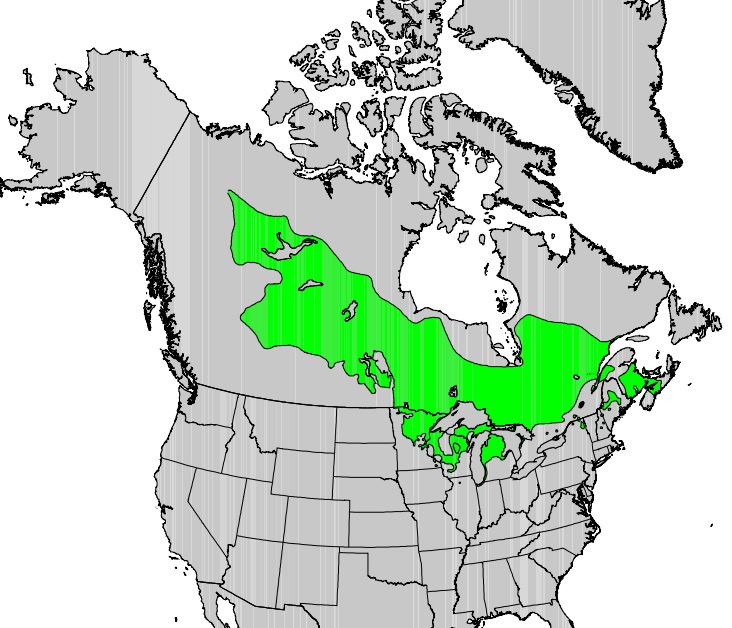
  • Mountain pine beetles, whose range is expanding due to warmer winters, are beginning to infest jack pines as well as lodgepole pines. To understand the danger from this transition, one only needs to look at the range maps for each species:

    Lodgepole Pine

    Jack Pine

    A study from Molecular Ecology, published last April, has the details.

  • Arctic sea ice extent was either the lowest on record or the second lowest on record, depending on how you collect and analyze the data. Sea ice volume, a much more important metric for climate change, was the lowest on record:

And one piece of good news:

  • Our abstract was accepted to AGU! I have been wanting to go to this conference for two years, and now I will get to!

What Does the Public Know?

Part 4 in a series of 5 for NextGen Journal

Like it or not, a scientific consensus exists that humans are causing the Earth to warm. However, the small number of scientists that disagree with this conclusion get a disproportionate amount of media time, particularly in the United States: most newspaper articles give the two “sides” equal weight. Does this false sense of balance in the media take a toll on public understanding of climate science? Are people getting the false impression that global warming is a tenuous and controversial theory? Recent survey data from George Mason University can help answer these questions.

65% of Americans say the world is warming, but only 46% attribute this change to human activities. Compare these numbers to 96% and 97% of climate scientists, respectively. Somewhere, the lines of communication are getting muddled.

It’s not as if people hear about scientific results but don’t believe them. Given that 76% of Americans “strongly” or “somewhat” trust scientists as sources of information on climate change, you would expect public knowledge to fall in line with scientific consensus. However, it appears that most people don’t know about this consensus. 41% of Americans say there is “a lot of disagreement among scientists” regarding global warming. Among Republicans, this figure rises to 56%; for the Tea Party, 69%.

If you could ask an expert one question about climate change, what would it be? Among survey respondents, the most popular answer (19%) was, “How do you know that global warming is caused mostly by human activities, not natural changes in the environment?” As a science communicator, this statistic intrigues me – it tells me what to focus on. For those who are interested, scientists can attribute changes in the climate to particular causes based on the way the global temperature changes: patterns of warming in different layers of the atmosphere, the rate of warming at night compared to in the day, in summer compared to in winter, and so on. You can read more about this topic here and here.

In this survey, the differences between Republicans and Democrats weren’t as extreme as I expected. Instead, it was the Tea Party that really stuck out. Self-identified Tea Party members are, based on their responses, the least informed about climate science, but also the most likely to consider themselves well-informed and the least likely to change their minds. A majority of members in every other political group would choose environmental sustainability over economic growth, if it came down to a choice; a majority of every other party thinks that the United States should reduce its greenhouse gas emissions regardless of what other countries do. But the Tea Party seems opposed to everything, including solutions as benign as urban planning.

Luckily, this anti-science movement only made up 12% of the survey respondents. Most Americans are far more willing to learn about climate change and question their knowledge, and there is no source that they trust more than scientists.

The Tar Sands

Apologies for the few weeks of silence. Moving cities again, combined with the beginning of a new term, meant hardly any writing time! I should be back into a regular routine now, though. Enjoy.

In the 2008 presidential campaign, Barack Obama seemed serious about climate change action. He promised an 80% reduction in American greenhouse gas emissions by 2050: a target which, if reached, would go a long way in solving global warming. Therefore, when he won the election, citizens concerned about climate change cheered the world over. “We will restore science to its rightful place,” Obama said following his inauguration. “We will harness the sun and the winds and the soil to fuel our cars and run our factories…All this we can do. And all this we will do.”

This cheery picture of a renewable energy economy is about as far away as one can get from the energy source Obama is now considering supporting: tar sands. Concentrated in Western Canada, the tar sands are an unconventional, and very dirty, form of oil. They produce more carbon dioxide emissions per unit of energy than regular petroleum – in fact, if you take transport and refinery into account, they’re slightly worse than coal. If we aggressively develop the tar sands, we will have no hope of stabilizing climate change at a reasonable level.

The problems don’t end there. Extraction and refinement takes over an incredible amount of land that would otherwise serve as vital habitat for wildlife. Additionally, tar sands are loaded with toxic substances such as heavy metals, which are removed during the refinement process. These byproducts inevitably leach into the water system, endangering the health of nearby First Nations communities and the viability of entire ecosystems in the boreal forest.

In my opinion, this is Canada’s most shameful practice. A short-term spike in jobs will lead to centuries of social, environmental, and economic damage. Sadly, many of our politicians think this trade-off is acceptable.

Now, industry is hoping for an American partnership in tar sand development. The proposed Keystone XL Pipeline would run all the way from Alberta to Texas, so tar could be refined in the US. Imagine the habitat destruction and pollution required to construct this pipeline. Imagine the consequences of a leak in the pipe. And imagine how much more of the tar sands will get dug up and burned if there is a demand from the US.

Luckily, this pipeline requires special permission from the president in order to be built. There is no deadlock in Congress to worry about; no concessions to make for the Tea Party. It’s all down to Obama. Will he keep his campaign promises?

How could someone promise to “restore science to its rightful place” while making decisions that every line of science predicts will endanger our future? How could someone make specific goals and targets, then turn around and take actions that guarantee these goals will fail? If the Keystone XL Pipeline is approved, it won’t be by the Obama we knew in 2008.

350.org, a nonprofit climate change action group, is coordinating a movement pressuring Obama to reject the pipeline. It includes typical lobbying efforts, including a petition signed by over 600 000 people, but is centered on a two week stretch of civil disobedience. Waves of volunteers formed a peaceful sit-in on White House property, and were willing to get arrested to draw attention to the issue. As of the sit-in’s conclusion on September 3rd, a total of 1,252 people had been arrested, including top climate scientist James Hansen, environmental journalist Bill McKibben, and author Naomi Klein.

Others condemned the pipeline at more of a distance. Recently, nine Nobel Peace Prize Laureates, including the Dalai Lama and Desmond Tutu, wrote to Obama, pleading with him to reject the proposal. Youth leaders from the PowerShift conferences threw in their support. Unsurprisingly, Al Gore denounced the pipeline, calling it an “enormous mistake”.

Is civil disobedience the answer? Will it build up the movement, or polarize it? If governments don’t listen to letters, why would they pay attention to protests? But if they don’t listen to this, why should we trust them at all?

Climate Change Denial: Heads in the Sand

I recently finished reading Climate Change Denial: Heads in the Sand by Haydn Washington and Skeptical Science founder John Cook. Given that I am a longtime reader of (and occasional contributor to) Skeptical Science, I didn’t expect to find much in this book that was new to me. However, I was pleasantly surprised.

Right from Chapter 1, Washington and Cook discuss a relatively uncharted area among similar books: denial among people who accept the reality of climate change. Even if a given citizen doesn’t identify as a skeptic/contrarian/lukewarmer/realist/etc, they hold information about global warming at arm’s length. The helplessness and guilt they feel from the problem leads them to ignore it. This implicit variety of denial is a common “delusion”, the authors argue – people practice it all the time with problems related to their health, finances, or relationships – but when it threatens the welfare of our entire planet, it is a dangerous “pathology”.

Therefore, the “information deficit model” of public engagement – based on an assumption that political will for action is only lacking because citizens don’t have enough information about the problem – is incorrect. The barriers to public knowledge and action aren’t scientific as much as “psychological, emotional, and behavioural”, the authors conclude.

This material makes me uncomfortable. An information deficit model would work to convince me that action was needed on a problem, so I have been focusing on it throughout my communication efforts. However, not everyone thinks the way I do (which is probably a good thing). So what am I supposed to do instead? I don’t know how to turn off the scientist part of my brain when I’m thinking about science.

The book goes on to summarize the science of climate change, in the comprehensible manner we have come to expect from Skeptical Science. It also dips into the site’s main purpose – classifying and rebutting climate change myths – with several examples of denier arguments. I appreciate how up-to-date this book is, as it touches on several topics that are included in few, if any, of my other books: a Climategate rebuttal, as well as an acknowledgement that the Venus syndrome on Earth, while distant, might be possible – James Hansen would even say plausible.

A few paragraphs are dedicated to discussing and criticizing scientific postmodernism, which I think is sorely needed – does anyone else find it strange that a movement which was historically quite liberal is now being resurrected by the science-denying ranks of conservatives? Critiques of silver-bullet approaches to mitigation, such as nuclear power alone or clean coal, are also included.

In short, Climate Change Denial: Heads in the Sand is well worth a read. It lacks the gripping narrative of Gwynne Dyer or Gabrielle Walker, both of whom have the ability to make scientific information feel like a mystery novel rather than a textbook, but it is enjoyable nonetheless. It adds worthy social science topics, such as implicit denial and postmodernism, to the discussion, paired with a taste of what Skeptical Science does best.

Who are the Skeptics?

Part 3 in a series of 5 for NextGen Journal
Adapted from part of an earlier post

As we discussed last time, there is a remarkable level of scientific consensus on the reality and severity of human-caused global warming. However, most members of the public are unaware of this consensus – a topic which we will focus on in the next installment. Anyone with an Internet connection or a newspaper subscription will be able to tell you that many scientists think global warming is natural or nonexistent. As we know, these scientists are in the vast minority, but they have enjoyed widespread media coverage. Let’s look at three of the most prominent skeptics, and examine what they’re saying.

S. Fred Singer is an atmospheric physicist and retired environmental science professor. He has rarely published in scientific journals since the 1960s, but he is very visible in the media. In recent years, he has claimed that the Earth has been cooling since 1998 (in 2006), that the Earth is warming, but it is natural and unstoppable (in 2007), and that the warming is artificial and due to the urban heat island effect (in 2009).

Richard Lindzen, also an atmospheric physicist, is far more active in the scientific community than Singer. However, most of his publications, including the prestigious IPCC report to which he contributed, conclude that climate change is real and caused by humans. He has published two papers stating that climate change is not serious: a 2001 paper hypothesizing that clouds would provide a negative feedback to cancel out global warming, and a 2009 paper claiming that climate sensitivity (the amount of warming caused by a doubling of carbon dioxide) was very low. Both of these ideas were rebutted by the academic community, and Lindzen’s methodology criticized. Lindzen has even publicly retracted his 2001 cloud claim. Therefore, in his academic life, Lindzen appears to be a mainstream climate scientist – contributing to assessment reports, abandoning theories that are disproved, and publishing work that affirms the theory of anthropogenic climate change. However, when Lindzen talks to the media, his statements change. He has implied that the world is not warming by calling attention to the lack of warming in the Antarctic (in 2004) and the thickening of some parts of the Greenland ice sheet (in 2006), without explaining that both of these apparent contradictions are well understood by scientists and in no way disprove warming. He has also claimed that the observed warming is minimal and natural (in 2006).

Finally, Patrick Michaels is an ecological climatologist who occasionally publishes peer-reviewed studies, but none that support his more outlandish claims. In 2009 alone, Michaels said that the observed warming is below what computer models predicted, that natural variations in oceanic cycles such as El Niño explain most of the warming, and that human activity explains most of the warming but it’s nothing to worry about because technology will save us (cached copy, as the original was taken down).

While examining these arguments from skeptical scientists, something quickly becomes apparent: many of the arguments are contradictory. For example, how can the world be cooling if it is also warming naturally? Not only do the skeptics as a group seem unable to agree on a consistent explanation, some of the individuals either change their mind every year or believe two contradictory theories at the same time. Additionally, none of these arguments are supported by the peer-reviewed literature. They are all elementary misconceptions which were proven erroneous long ago. Multiple articles on this site could be devoted to rebutting such claims, but easy-to-read rebuttals for virtually every objection to human-caused climate change are already available on Skeptical Science. Here is a list of rebuttals relevant to the claims of Singer, Lindzen and Michaels:

With a little bit of research, the claims of these skeptics quickly fall apart. It does not seem possible that they are attempting to further our knowledge of science, as their arguments are so weak and inconsistent, and rarely published in scientific venues. However, their pattern of arguments does work as a media strategy, as most people will trust what a scientist says in the newspaper, and not research his reputation or remember his name. Over time, the public will start to remember dozens of so-called problems with the anthropogenic climate change theory.

Open Thread

Again, I am getting sloppy on publishing these regularly…

Possible topics for discussion:

Enjoy!

Is There Consensus?

Part 2 of a series of 5 for NextGen Journal

We hear the phrase “climate change consensus” tossed around all the time. But what does that even mean? And does it actually exist?

In Part 1 we discussed the concept of a scientific consensus: overwhelming agreement (but rarely unanimity) among experts. Of course, such a consensus could be wrong, but it wouldn’t be very sensible for the public to ignore it or bet against it. If 19 out of 20 doctors said you needed surgery to save your life, would you sit in the hospital bed and argue about their motives?

When it comes to climate change, the consensus view can be summarized as follows:

  1. Human emissions of greenhouse gases, mainly from the burning of fossil fuels, are a significant force on the global climate.
  2. The expected warming from this force is beginning to show up.

Often, people will write these two points in opposite order: the Earth is warming, and it’s due to our actions. However, that’s not the order that scientists discovered them. The academic community realized the Earth was going to warm decades before that warming became clear. Flipping around these observations might imply “that the entirety of climate science is based upon a single correlation study”.

So, what do the scientists say? In fact, publishing climatologists – the most specialized and knowledgeable people there with regards to climate change – are almost unanimous in their position. 96.2% say the Earth is warming, and 97.4% say humans are causing climate change. It’s hard to know why the second figure is higher than the first – perhaps one scientist in the study thought the effects of our actions hadn’t shown up yet (i.e., point 1 but not point 2).

A year later, others built on this study. They had a larger sample of climate scientists, 97-98% of whom agreed with the consensus position. Additionally, those who agreed had higher academic credibility than those who disagreed: they had published more papers (“expertise”) and been cited more times (“prominence”).

However, it doesn’t really matter what a scientist says, as much as how they back it up. Having a Ph.D. doesn’t mean you get to stop supporting your claims. In the academic community, this is done in the peer reviewed literature.

In 2004, a random sample of almost 1000 scientific studies on climate change were examined. 75% of the studies explicitly supported the consensus position, while the remaining 25% didn’t mention it – for example, some papers wrote about climate change millions of years ago, so today’s climate wasn’t relevant. Incredibly, not a single one disagreed with the consensus.

This still doesn’t imply unanimity – remember, it was a random sample, not the entire literature. A very few dissenting studies do get published each year, but they are such a tiny fraction of the total papers that it’s not surprising that none showed up in a sample of one thousand. Additionally, these papers generally fail to stand up to further scrutiny – their methods are often heavily critiqued by the academic community. See, for example, Lindzen and Choi, 2009 and its response.

It’s clear that individual polls have limitations. They are restricted to a sample of scientists or papers, rather than the entire community. They don’t take into account which claims stood the test of time, and which were refuted. Luckily, the climate science community has another way to summarize the balance of evidence on global warming: the Intergovernmental Panel on Climate Change (IPCC). Since 1988, four assessment reports have been written by thousands of volunteer scientists worldwide. They examine the entire body of academic literature on climate change and create a summary, which is then painstakingly reviewed and scrutinized by others.

The latest report, published in 2007, is already quite out of date – due to the long review process, most of the data is from 2002 and earlier. However, it is still used by governments worldwide, so let’s look at some of its key findings:

  • “Warming of the climate system is unequivocal, as is now evident from observations of increases in global average air and ocean temperatures, widespread melting of snow and ice and rising global average sea level.”
  • “Most of the observed increase in global average temperatures since the mid-20th century is very likely due to the observed increase in anthropogenic GHG concentrations.”
  • “Anthropogenic warming over the last three decades has likely had a discernible influence at the global scale on observed changes in many physical and biological systems.”
  • “Altered frequencies and intensities of extreme weather, together with sea level rise, are expected to have mostly adverse effects on natural and human systems.”
  • “Anthropogenic warming could lead to some impacts that are abrupt or irreversible, depending upon the rate and magnitude of the climate change.”

The final place to look for scientific consensus is statements from scientific organizations, such as the National Academy of Sciences. Not a single scientific organization worldwide disputes the consensus view, and many have published statements explicitly supporting it. A full list is available here, but here are some samples:

Climate change and sustainable energy supply are crucial challenges for the future of humanity. It is essential that world leaders agree on the emission reductions needed to combat negative consequences of anthropogenic climate change[.]
Thirteen national academies of science

It is certain that increased greenhouse gas emissions from the burning of fossil fuels and from land use change lead to a warming of climate, and it is very likely that these green house gases are the dominant cause of the global warming that has been taking place over the last 50 years.
Royal Society (UK)

The scientific evidence is clear: global climate change caused by human activities is occurring now, and it is a growing threat to society.
American Association for the Advancement of Science

[C]omprehensive scientific assessments of our current and potential future climates clearly indicate that climate change is real, largely attributable to emissions from human activities, and potentially a very serious problem.
American Chemical Society

Emissions of greenhouse gases from human activities are changing the atmosphere in ways that affect the Earth’s climate…The evidence is incontrovertible: Global warming is occurring. If no mitigating actions are taken, significant disruptions in the Earth’s physical and ecological systems, social systems, security and human health are likely to occur. We must reduce emissions of greenhouse gases beginning now.
American Physical Society

The Earth’s climate is now clearly out of balance and is warming. Many components of the climate system…are now changing at rates and in patterns that are not natural and are best explained by the increased atmospheric abundances of greenhouse gases and aerosols generated by human activity during the 20th century.
American Geophysical Union

It’s clear that a scientific consensus on climate change does exist. Since unanimity is virtually impossible in science, agreement over climate change can’t get much stronger than it is already.

Could all of these scientists, papers, reports, and organizations be wrong? Of course – nobody is infallible. Could that 3% of dissenting scientists triumph like Galileo? It’s possible.

But how much are you willing to risk on that chance?

The Dangers of Being a Scientist

In which occupations would you expect to be threatened with murder?

Soldiers, at the front lines of combat zones, are an obvious example. Police officers would often qualify, too. Even high-ranking government officials put their safety at risk – just look at the number of American presidents that have been assassinated. Gang leaders and drug dealers, if they can be called “occupations”, would be high on the list.

What about scientists?

They don’t spend their days suppressing violent criminals. Although they’ll occasionally speak to the media, they could hardly be called public or political figures. Their job is to learn about the world, whether they sit in a lab and crunch numbers or travel to the Antarctic and drill ice cores. Not exactly the kind of life where threats to personal safety seem likely.

Nevertheless, top climate scientists around the world have been receiving death threats for over a year now. This violent hate campaign recently reached Australia, where, as journalist Rosslyn Beeby writes, “Several universities…have been forced to upgrade security to protect scientists.”

Their names have been deleted from staff directories. One scientist’s office cannot be found by without photo identification and an official escort; another has a “panic button”, installed on advice of police.

Some researchers have installed advanced home security systems, and made their home addresses and phone numbers unlisted. They have deleted their accounts on social media sites. All because some people feel so threatened by the idea of human-caused climate change that they’d rather attack the scientists who study the problem than accept its reality and work to fix it.

In the United States, such threats to climate scientists are commonplace, but the hate speech is protected by the American freedom of speech laws, so there isn’t much police can do. The situation isn’t quite as widespread in the UK, although several scientists have been excessively targeted due to the “Climategate” campaign.

Nobody has been hurt, at least not yet. However, many researchers receive regular emails threatening murder, bodily harm, sexual assault, property damage, or attacks on family members. One anonymous scientist had a dead animal dumped on his doorstep and now travels with bodyguards. A young Australian woman who gave a speech at a library about carbon footprints had the words “Climate Turd” written in feces on her car.

Several American scientists say that the threats pick up whenever right-wing talk show hosts attack their reputations. It’s common for Glenn Beck or Rush Limbaugh to single out climate scientists as socialist frauds, or some variation of the sort. However, knowing that the more extreme viewers of Fox News will watch these baseless attacks and, subsequently, whip off threats of murder in emails to the scientists involved, is unsettling, to say the least.

We probably shouldn’t be surprised that some people who deny the reality of climate change are also denying the reality of these violent threats. In Australia, the Liberal spokesperson for science, Sophie Mirabella, stated that “the apparently false allegation of death threats have diminished the individuals involved and reflect poorly on the scientific community”. In some ironic twist of logic, the victims of hate crimes are now receiving even more public battering of their reputations, simply because they reported these crimes. There’s no way to win.

We can only hope that these threats will subside with time, and that nobody will get hurt in the process. We can only hope that governments and police agencies will take the threats seriously and pursue investigations. However, once climate change becomes so obvious that even extremists can’t deny it, we will all face a greater danger: the impacts of climate change itself. We can only hope that these hate crimes don’t frighten scientists into staying silent – because their knowledge and their voices might be our only chance.

References:

1) Beeby, Rosslyn. “Climate of fear: scientists face death threats.” The Canberra Times, 4 June 2011.
2) Beeby, Rosslyn. “Change of attitude needed as debate overheats.” The Canberra Times, 14 June 2011.
3) Hickman, Leo. “US climate scientists receive hate mail barrage in wake of UEA scandal.” The Guardian, 5 July 2010.

Quality, Transparency, and Rigour

The Intergovernmental Panel on Climate Change (IPCC) reports are likely the most cited documents on the subject of global warming. The organization, established by the United Nations, doesn’t do any original research – it simply summarizes the massive amount of scientific literature on the topic. Their reports, written and reviewed by volunteer scientists, and published approximately every six years, are a “one-stop shop” for credible information about climate change. When you have a question about climate science, it’s far easier to find the relevant section of the IPCC than it is to wade through thousands of results on Google Scholar.

The main problem with the IPCC, in my opinion, is that their reports are out of date as soon as they’re published, and then everyone has to wait another six years or so for the next version, which is subsequently out of date, and so on. Additionally, because there are so many authors, reviewers, and stakeholders involved in the IPCC, the reports come to reflect the lowest-common-denominator scientific understanding, rather than the median opinion of experts. In particular, government officials oversee the writing and reviewing of the Summary for Policymakers, to make sure that it’s relevant and clear. However, some governments are beginning to abuse their power in this process. The late Stephen Schneider, in his 2009 book Science as a Contact Sport, recounts his experiences with government representatives who absolutely refuse to allow certain conclusions to be published in the IPCC, regardless of their scientific backing.

The result is that the IPCC reports frequently underestimate the severity of climate change. For example, in the most recent report, the worst-case estimate of sea level rise by the end of this century was 0.59 m. Since then, scientists have revised this estimate to 1.9 m, but it won’t show up in the report until the next edition comes out around 2014.

Another example concerns Arctic sea ice: the worst-case scenario from the IPCC was an ice-free Arctic in the summer beginning around 2100. These estimates have come down so rapidly that there’s an outside chance the summer sea ice could be gone before the next IPCC report has a chance to correct it (presentation by Dr. David Barber, media coverage available here). It will more likely disappear around 2035, but that’s still a drastic change from what the IPCC said.

Despite this conservative stance, there are still some who think the IPCC is alarmist (this is usually paired with something about a New World Order and/or socialists using a carbon tax to take over the world). Naturally, the IPCC has become a favourite target of climate change deniers, who wish to obscure the reality of human-caused global warming. Last year, they claimed to have found all kinds of errors in the latest report, somehow proving that global warming wasn’t happening. In fact, most of these so-called “errors” were nothing of the sort, and the worst of the two real mistakes in the report involved a typo regarding which year certain glaicers were expected to disappear. Not bad, for a three-thousand-page document, but it created quite the media firestorm. Apparently scientists are expected to have 100% accuracy at all times, or else they are frauds.

Just a few weeks ago, the IPCC made some changes to their policies in response to these events. Their press release about the new policies featured the phrase “Boost Quality, Transparency and Rigour” in the title.

No, no, no. That’s not what the IPCC needs. These are very admirable goals, but they’re doing just fine as it is. Actions to “further minimize any possibility of errors in future reports” should not be their top priority. Further extending the review process will only further delay the publication of each report (making them even more out of date) and further enhance their lowest-common-denominator position. When you have an error rate on the order of 0.67 errors/1000 pages, should you spend your energy getting that all the way down to zero (a virtually impossible task) or on the real issues that need to be addressed?

I think the IPCC should adopt a continually-updating online version of their report. This would solve their chronic problem of being out of date, as well as help the organization adapt to the increasing role of the Internet in our world. Any future errors the deniers liked to yell about would be fixed immediately. Governments would be forming policies based on the best available evidence from today, not a decade ago. Everything would still be in one place, and version control would allow transparency to remain high.

The IPCC should also make it more clear when their estimates are too conservative. When a single sentence that didn’t even make it into the summary is shown to overestimate the problem, the climate science community ties itself up in knots trying to correct its tattered image. But prominent conclusions that underestimate the problem go unacknowledged for decades. If it were the other way around, can you imagine the field day deniers would have?

Luckily, the changes made to IPCC policy are not all aimed at appeasing the bullies. A long-overdue communications plan is in development: a rapid response team and Senior Communications Manager will develop formal strategies for public education and outreach. Hopefully, this will counteract the false claims and defamation the IPCC has been subject to since its creation.

Another new plan is to create an Executive Committee, composed of the Chair, Vice Chairs, Working Group Co-Chairs, and advisory members. This will “strengthen coordination and management of the IPCC” and allow for actions to be taken between reports, such as communication and responding to possible errors. A more structured administration will probably be helpful, given that the only people in the organization currently getting paid for their work are the office staff (even the Chair doesn’t make a cent). Coordinating overworked scientists who volunteer for a scientific undertaking that demands 100% accuracy can’t be an easy task.

Will the IPCC continue to be the best available source of credible information on climate change? Will its structure of endless review remain feasible in a world dominated by instant news? Should we continue to grant our governments control over the contents of scientific reports concerning an issue that they desperately want to avoid? Should we continue to play to the wants and needs of bullies? Or should we let scientists speak for themselves?