This list could be applied to any area of science. I chose climate science because it’s what I’m interested in, and because its reporting is the most obviously abysmal at present.
- Try to get hired as a specialized science reporter. It might not be as cost-effective for a media outlet as having general reporters cover everything – but what kind of a price are they willing to put on accuracy? As Stephen Schneider wrote in his last book, newspapers would never allow general reporters to cover the Super Bowl, so why would they allow them to cover recent topics in science, which are far more complex than football?
- Keep up with the scientific literature. Subscribe to Science, Nature, and PNAS. Many important papers are published in one of these three journals. See if the media outlet you work for can cover the cost.
- Learn about common climate change misconceptions. The best website to help with this is Skeptical Science. Their database of arguments and rebuttals is detailed, comprehensive, and impeccably cited. It’s also available as an app for various smartphones, so you can read it on the bus.
- Get to know the local climate scientists. At virtually every university, there is someone who studies some aspect of climate change, usually in the geography department. In my experience, climate science professors are easy to get a hold of (email is usually their favourite mode of communication) and more than willing to discuss their work (although that might just be because I’m an over-enthusiastic student). Don’t just email them when you’re writing a story about climate change – try to keep up a steady thread of conversation. You will learn an incredible amount.
- Talk to people you know about climate change and find out what confuses them. This will give you more direction as to what to focus on in your stories.
- Be diligent about assessing credibility. In a topic such as climate change, where there are people out there trying to mislead you, this is more important than ever. Refer to the credibility spectrum for more.
- Be very, very careful with quotes. Try to only quote primary sources. If you’re quoting a secondary source – usually a quote that was published in another newspaper somewhere – contact the person who said it, so you can double-check the accuracy as well as get some more quotes from them while you’re at it. If the quote is from a written source, such as scientific reports or stolen emails, try to find it in its original context. You might be surprised.
- Send the finished article to the scientists you quote before it’s printed. If the British media had done this before they started the Whatevergate rumours, a lot of confusion would have been avoided. Remember that the reputations of scientists could be on the line if you misrepresent what they say.
- Don’t let the hate mail get to you. Honest reporting of climate science will doubtlessly lead to lots of angry emails and letters to the editor about how global warming is a vast conspiracy because it’s not happening, it’s caused by the sun, the climate has changed before, and the climate has internal negative feedbacks which prevent it from changing. You’ll also receive personal attacks about how you are a pathological liar, a Communist, and a quasi-religious zealot. I have endured a lot of this myself, and I have found that the most effective way of dealing with it is by looking at the humorous side. Some of it is just priceless. My favourite is the comment from the guy who stocked up on incandescent lightbulbs just to spite me.
- Remember the importance of what you’re doing. This is the best motivator for improving your climate change journalism. Maybe you won’t be around for the worst of climate change, but your kids will, and their kids will, and all these future generations will look back at ours, as the time when this problem could have been solved and wasn’t. Even though we can’t completely solve it at this point, as some amount of future warming is guaranteed, we can always stop it from getting worse. Riding our bikes and composting isn’t enough any more. We need major international action if we want to have a chance to keep this problem at bay. However, because we live in a democracy, action will only be taken if voters demand it, and voters won’t demand a solution if they don’t understand the problem. And they won’t understand the problem unless dedicated people like you show them the way.






 Of all the books I have read about climate change, Snowball Earth, by Gabrielle Walker, is definitely one of the best – and it’s not even about the current climate change.
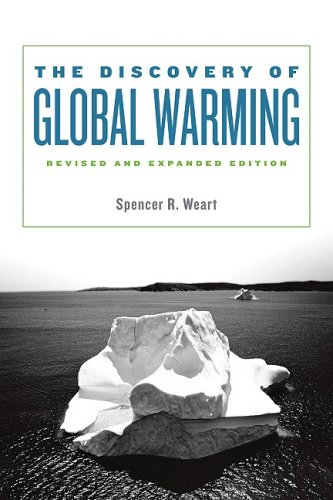 A common remark I make about climate change books I like is that “it wasn’t like a textbook”. I like non-fiction books that I can carry around and read cover-to-cover just like I would a novel. I like them to draw me in and catch my interest as if they were a suspenseful PD James or just a comfortable Maeve Binchy.
 ClimateSight