Unknown's avatar

About climatesight

Kaitlin Naughten is an ocean-ice modeller at the British Antarctic Survey in Cambridge.

A Vast Machine

I read Paul Edward’s A Vast Machine this summer while working with Steve Easterbrook. It was highly relevant to my research, but I would recommend it to anyone interested in climate change or mathematical modelling. Think The Discovery of Global Warming, but more specialized.

Much of the public seems to perceive observational data as superior to scientific models. The U.S. government has even attempted to mandate that research institutions focus on data above models, as if it is somehow more trustworthy. This is not the case. Data can have just as many problems as models, and when the two disagree, either could be wrong. For example, in a high school physics lab, I once calculated the acceleration due to gravity to be about 30 m/s2. There was nothing wrong with Newton’s Laws of Motion – our instrumentation was just faulty.

Additionally, data and models are inextricably linked. In meteorology, GCMs produce forecasts from observational data, but that same data from surface stations was fed through a series of algorithms – a model for interpolation – to make it cover an entire region. “Without models, there are no data,” Edwards proclaims, and he makes a convincing case.

The majority of the book discussed the history of climate modelling, from the 1800s until today. There was Arrhenius, followed by Angstrom who seemed to discredit the entire greenhouse theory, which was not revived until Callendar came along in the 1930s with a better spectroscope. There was the question of the ice ages, and the mistaken perception that forcing from CO2 and forcing from orbital changes (the Milankovitch model) were mutually exclusive.

For decades, those who studied the atmosphere were split into three groups, with three different strategies. Forecasters needed speed in their predictions, so they used intuition and historical analogues rather than numerical methods. Theoretical meteorologists wanted to understand weather using physics, but numerical methods for solving differential equations didn’t exist yet, so nothing was actually calculated. Empiricists thought the system was too complex for any kind of theory, so they just described climate using statistics, and didn’t worry about large-scale explanations.

The three groups began to merge as the computer age dawned and large amounts of calculations became feasible. Punch-cards came first, speeding up numerical forecasting considerably, but not enough to make it practical. ENIAC, the first model on a digital computer, allowed simulations to run as fast as real time (today the model can run on a phone, and 24 hours are simulated in less than a second).

Before long, theoretical meteorologists “inherited” the field of climatology. Large research institutions, such as NCAR, formed in an attempt to pool computing resources. With incredibly simplistic models and primitive computers (2-3 KB storage), the physicists were able to generate simulations that looked somewhat like the real world: Hadley cells, trade winds, and so on.

There were three main fronts for progress in atmospheric modelling: better numerical methods, which decreased errors from approximation; higher resolution models with more gridpoints; and higher complexity, including more physical processes. As well as forecast GCMs, which are initialized with observations and run at maximum resolution for about a week of simulated time, scientists developed climate GCMs. These didn’t use any observational data at all; instead, the “spin-up” process fed known forcings into a static Earth, started the planet spinning, and waited until it settled down into a complex climate and circulation that looked a lot like the real world. There was still tension between empiricism and theory in models, as some factors were parameterized rather than being included in the spin-up.

The Cold War, despite what it did to international relations, brought tremendous benefits to atmospheric science. Much of our understanding of the atmosphere and the observation infrastructure traces back to this period, when governments were monitoring nuclear fallout, spying on enemy countries with satellites, and considering small-scale geoengineering as warfare.

I appreciated how up-to-date this book was, as it discussed AR4, the MSU “satellites show cooling!” controversy, Watt’s Up With That, and the Republican anti-science movement. In particular, Edwards emphasized the distinction between skepticism for scientific purposes and skepticism for political purposes. “Does this mean we should pay no attention to alternative explanations or stop checking the data?” he writes. “As a matter of science, no…As a matter of policy, yes.”

Another passage beautifully sums up the entire narrative: “Like data about the climate’s past, model predictions of its future shimmer. Climate knowledge is probabilistic. You will never get a single definitive picture, either of exactly how much the climate has already changed or of how much it will change in the future. What you will get, instead, is a range. What the range tells you is that “no change at all” is simply not in the cards, and that something closer to the high end of the range – a climate catastrophe – looks all the more likely as time goes on.”

A Conversation with Gavin Schmidt

Cross-posted from NextGenJournal

Dr. Gavin Schmidt is a climate modeller at NASA’s Goddard Institute for Space Studies, as well as the editor at RealClimate. I recently had the opportunity to interview Dr. Schmidt, one of the top scientists in his field, on what we can expect from the climate in the coming decades. Here is the entirety of the interview we completed for my article Climate Change and Young People.

Kate: In a business-as-usual scenario, what range of warming can we expect within the lifetimes of today’s young people – so to about 2070 or 2080?

Gavin: Well, we don’t have a perfect crystal ball for exactly what “business-as-usual” means, but the kind of projections that people have been looking at – which involve quite high increases in population and minimal changes in technology – you are talking about global temperature changes, by about 2070, of somewhere between two, three, five degrees Celsius, depending a little bit on the scenario, and a little bit on how sensitive the climate actually is.

That metric is a bit abstract to most people, so how will that amount of warming actually impact people’s lives?

That’s a very good question, because most people don’t live in the global mean temperature, or the global mean anything. Those kinds of numbers translate to larger changes, between four and six degrees of warming, over the land. As you go towards the poles it becomes larger as well, because of the amplifying feedbacks of ice albedo changes and reductions in snow cover.

Right now the range between a cold summer and a warm summer, in most mid-latitude places, is on the order of a couple of degrees. You’ll be looking at summers then – the normal summer then – will be warmer than the warmest summers that you have now, and significantly warmer than the coldest summers. The same will be true in winter time and other seasons.

How will that impact metrics such as agriculture, food prices, the economy…?

It’s easy enough to say that there are going to be some impacts – obviously agriculture depends on the climate that exists. People will adapt to that, they’ll plant earlier, but crops are very sensitive to peak summer temperatures. So you’ll see losses in the fatally sensitive crops. But then you’ll see movement north of crops that were grown further south. You have to deal with the other changes – in nutrient balances, water availability, soil quality. We’re not talking about just moving the subtropics further toward the poles.

Lots of other things are going to change as well. Pests travel much faster with climate than do other kinds of species: invasive species tend to increase faster, because they’re moving into an empty niche, than species that are already well established. There’s going to be changes to rainfall regimes, whether it snows or rains, how heavily it rains – a lot of those things will tax infrastructure.

You’ve got changes for people living on the coast related to sea level rise. That will lead to changes in the damaging effects of storm surges when any particular storm comes through. We’re also looking at more subtle changes to the storms themselves, which could even amplify that effect.

How much of this warming, and these impacts, are now inevitable? Do we have the ability to prevent most of it, and what would that take?

Some further changes are inevitable. The system has so much inertia, and it hasn’t even caught up with what we’ve put into the atmosphere so far. As it continues to catch up, even if we don’t do anything else to the atmosphere from now on, we’ll still see further warming and further changes to the climate. But we do have a choice as to whether we try and minimize these changes in the future, or we allow the maximum change to occur. And the maximum changes really are very large. It’s been said that if we allow that to happen, we’ll end up living on a different planet, and I think there’s some certain truth to that.

I hear you talking a lot about uncertainty, and that’s something a lot of people are paralyzed by: they don’t want us to take these actions because they think everything might be fine on its own. What’s your response to that attitude?

Any decision that you’re making now that has to do with the future is uncertain. We make decisions all the time: where to invest money, whether to buy a house – these things aren’t certain, and we still have to make decisions. The issue with climate is that no action is a decision in and of itself. That one is actually laden with far more uncertainty than if we actually try and produce energy more efficiently, try and use more renewables, adjust the way we live so that we have a more sustainable future. The uncertainty comes with what would happen if we don’t make a decision, and I find that to be the dominant uncertainty. But climate change is not unique in having to deal with decision making under uncertainty. All decisions are like that. It’s nothing special about climate change in that there’s uncertainty about what’s going to happen in the future. Any time we decide to do anything, there’s uncertainty about the future, yet we still manage to get out of bed in the morning.

Probably in response to this attitude, climate science has got a lot of bad press in the past couple years. What have your experiences been – what sort of reactions have there been to your research?

There are a lot of people, particularly in the US, who perceive the science itself – just describing what’s going on and why – as a threat to their interests. To my mind, knowing what’s going on in the planet and trying to understand why should just be information, it shouldn’t be a threat. But other people see it as a threat, and instead of dealing with either their perceptions or what the science actually means, they choose to attack the science and they choose to attack the scientists. Basically, you just have people adopting a “shoot the messenger” strategy, which plays well in the media. It doesn’t get us very far in terms of better understanding what’s going on. But it does add a sort of smokescreen to divert people’s attention from what the real issues are. That’s regrettable, but I don’t think it’s at all surprising.

And finally, are you at all optimistic about the future?

It depends on the day.

Climate Change and Young People

Cross-posted from NextGen Journal

What is the most important policy issue facing today’s young people? Climate change might not seem like an obvious contender, as it feels so distant. Indeed, the majority of impacts from global warming have yet to come. But the magnitude and extent of those impacts are being determined right now. Only today’s young people will still be around to witness the effects of today’s actions.

Many people see climate change as just another environmental issue that will only impact the polar bears and coral reefs. In fact, it’s far more wide-reaching than that. An increase of only a few degrees in average global temperature will affect human systems of all kinds: agriculture, public health, economics, and infrastructure, just to name a few.

Dr. Gavin Schmidt, a climate modeller at NASA’s Goddard Institute for Space Studies and one of the world’s top scientists studying global warming, says that significant changes in global temperature can be expected within the lifetimes of young people alive today – “somewhere between two, three, five degrees Celsius, depending a little bit on the scenario, and a little bit on how sensitive the climate actually is.” It might sound like a small change, until you look back at the history of the Earth’s climate and realize that the last ice age was only around 5 degrees Celsius cooler than today. Additionally, the rate of warming (which is the more important metric for the ability of species, including people, to adapt) is higher today than it has been at any time for at the least the past 55 million years. Human technology has far surpassed the natural forces in the climate system, to the point where significant future warming is inevitable. In fact, says Schmidt, the climate system “hasn’t even caught up with what we’ve put into the atmosphere so far. As it continues to catch up, even if we don’t do anything else to the atmosphere from now on, we’ll still see further warming and further changes to the climate.”

However, the future is still quite malleable. Two degrees of warming is bad, but five degrees is far worse, and the difference between the two ends of the spectrum will depend on what we decide to do about the problem. Since our emissions of greenhouse gases, especially carbon dioxide, are causing global warming, the solution is self-evident: cut our emissions, as quickly as we can reasonably do so. Implementing this solution is not so simple, as fossil fuels are currently highly integrated into the global economy. Luckily, free-market mechanisms exist which alter the price signals of fossil fuels to better reflect the damage they cause. A revenue-neutral carbon tax, which is offset by reductions in income taxes or paid back evenly to the public as a dividend, is one solution; a cap-and-trade program, which treats carbon emissions like a currency, is another. While virtually nothing has been done in North America to cut emissions, the rest of the developed world has made a pretty good start.

Here in North America, the outlook for action is somewhat bleak. In the United States, says Schmidt, many people “perceive the science itself – just describing what’s going on and why – as a threat to their interests…they choose to attack the science and they choose to attack the scientists.” The Republican Party has adopted this strategy of denial, to the point where top presidential candidates such as Michelle Bachmann and Rick Perry truly believe that climate change is a hoax scientists cooked up to get grant money. The Democrats largely accept the science, but after nearly a full term in office, President Barack Obama hasn’t made any progress on the cap-and-trade program he promised upon his election. In Canada, Prime Minister Stephen Harper has repeatedly said that he will follow whatever actions the United States takes, or does not take, on climate change policy.

It seems that action necessary to mitigate global warming won’t be taken unless citizens demand it. Otherwise, emissions will likely continue unabated until the problem is too severe to ignore any longer – and even then, the situation will get worse for decades while the climate system catches up. “No action,” says Schmidt, “is a decision in and of itself.”

What decision, then, will we make? Will we get our act together in time to keep the warming at a tolerable level? Or will we choose to let it spiral out of control? Will future societies look back on us with resentment, or with admiration? Remember, you and I are part of those future societies. But we are also part of today’s.

Thousands of years from now, it won’t matter what the US deficit was in 2011, or which nations went to war with each other, or how much we invested in higher education. These issues matter a great deal to people today, but they are very transient, like many aspects of human systems. Climate change, though, will alter the earth on a geological timescale. It will take the planet around one hundred thousand years to undo what we are doing. We are leaving behind a very unfortunate legacy to the entirety of future human civilization, and all life on Earth – a legacy that is being shaped as you read this; a legacy that we could largely avoid if we chose to.

The Pitfalls of General Reporting: A Case Study

Today’s edition of Nature included an alarming paper, indicating record ozone loss in the Arctic due to an unusually long period of cold temperatures in the lower stratosphere.

On the same day, coverage of the story by the Canadian Press included a fundamental error that is already contributing to public confusion about the reality of climate change.

Counter-intuitively, while global warming causes temperatures in the troposphere (the lowest layer of the atmosphere) to rise, it causes temperatures in the stratosphere (the next layer up), as well as every layer above that, to fall. The exact mechanics are complex, but the pattern of a warming troposphere and a cooling stratosphere has been both predicted and observed.

This pattern was observed in the Arctic this year. As the Nature paper mentions, the stratosphere was unusually cold in early 2011. The surface temperatures, however, were unusually warm, as data from NASA shows:

Mar-May 2011

Dec-Feb 2011

While we can’t know for sure whether or not the unusual stratospheric conditions were caused by climate change, this chain of cause and effect is entirely consistent with what we can expect in a warming world.

However, if all you read was an article by the Canadian Press, you could be forgiven for thinking differently.

The article states that the ozone loss was “caused by an unusually prolonged period of extremely low temperatures.” I’m going to assume that means surface temperatures, because nothing else is specified – and virtually every member of the public would assume that too. As we saw from the NASA maps, though, cold surface temperatures couldn’t be further from the truth.

The headline, which was probably written by the Winnipeg Free Press, rather than the Canadian Press, tops off the glaring misconception nicely:

Record Ozone loss over the Arctic caused by extremely cold weather: scientists

No, no, no. Weather happens in the troposphere, not the stratosphere. While the stratosphere was extremely cold, the troposphere certainly was not. It appears that the reporters assumed the word “stratosphere” in the paper’s abstract was completely unimportant. In fact, it changes the meaning of the story entirely.

The reaction to this article, as seen in the comments section, is predictable:

So with global warming our winters are colder?

First it’s global warming that is destroying Earth, now it’s being too cold?! I’m starting to think these guys know as much about this as weather guys know about forecasting the weather!

Al gore the biggest con man since the beginning of mankind!! This guys holdings leave a bigger carbon footprint than most small countries!!

I’m confused. I thought the north was getting warmer and that’s why the polar bears are roaming around Churchill looking for food. There isn’t ice for them to go fishing.

People are already confused, and deniers are already using this journalistic error as evidence that global warming is fake. All because a major science story was written by a general reporter who didn’t understand the study they were covering.

In Manitoba, high school students learn about the different layers of the atmosphere in the mandatory grade 10 science course. Now, reporters who can’t recall this information are writing science stories for the Canadian Press.

Another Sporadic Open Thread

I keep forgetting to put these up.

Possible topics for discussion:

  • La Niña is expected to continue into the winter. This is definitely not what southern U.S. states, such as Texas, want – after a summer of intense drought, the drying effect of La Niña on that area of the world won’t bring any relief.
  • For those of you going to AGU, an itinerary planner is now available to browse the program and save sessions you’re interested in. I am compiling an awesome-looking list of presentations by the likes of James Hansen, Wally Broecker and Gavin Schmidt. Our poster is entitled “The Software Architecture of Global Climate Models”, and is on the Thursday morning.
  • Has anyone read Earth, an Operator’s Manual by Richard Alley? If so, would you recommend it?

Enjoy!

News

Two pieces of bad news:

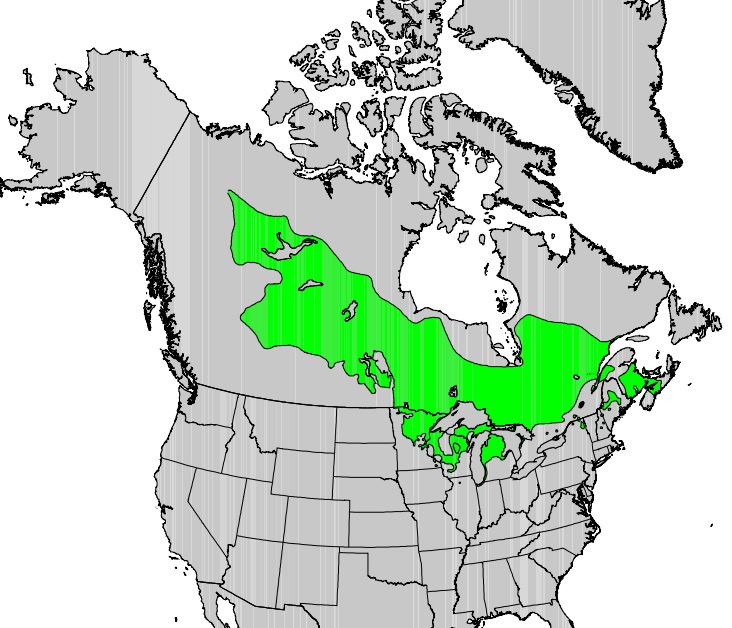
  • Mountain pine beetles, whose range is expanding due to warmer winters, are beginning to infest jack pines as well as lodgepole pines. To understand the danger from this transition, one only needs to look at the range maps for each species:

    Lodgepole Pine

    Jack Pine

    A study from Molecular Ecology, published last April, has the details.

  • Arctic sea ice extent was either the lowest on record or the second lowest on record, depending on how you collect and analyze the data. Sea ice volume, a much more important metric for climate change, was the lowest on record:

And one piece of good news:

  • Our abstract was accepted to AGU! I have been wanting to go to this conference for two years, and now I will get to!

What Does the Public Know?

Part 4 in a series of 5 for NextGen Journal

Like it or not, a scientific consensus exists that humans are causing the Earth to warm. However, the small number of scientists that disagree with this conclusion get a disproportionate amount of media time, particularly in the United States: most newspaper articles give the two “sides” equal weight. Does this false sense of balance in the media take a toll on public understanding of climate science? Are people getting the false impression that global warming is a tenuous and controversial theory? Recent survey data from George Mason University can help answer these questions.

65% of Americans say the world is warming, but only 46% attribute this change to human activities. Compare these numbers to 96% and 97% of climate scientists, respectively. Somewhere, the lines of communication are getting muddled.

It’s not as if people hear about scientific results but don’t believe them. Given that 76% of Americans “strongly” or “somewhat” trust scientists as sources of information on climate change, you would expect public knowledge to fall in line with scientific consensus. However, it appears that most people don’t know about this consensus. 41% of Americans say there is “a lot of disagreement among scientists” regarding global warming. Among Republicans, this figure rises to 56%; for the Tea Party, 69%.

If you could ask an expert one question about climate change, what would it be? Among survey respondents, the most popular answer (19%) was, “How do you know that global warming is caused mostly by human activities, not natural changes in the environment?” As a science communicator, this statistic intrigues me – it tells me what to focus on. For those who are interested, scientists can attribute changes in the climate to particular causes based on the way the global temperature changes: patterns of warming in different layers of the atmosphere, the rate of warming at night compared to in the day, in summer compared to in winter, and so on. You can read more about this topic here and here.

In this survey, the differences between Republicans and Democrats weren’t as extreme as I expected. Instead, it was the Tea Party that really stuck out. Self-identified Tea Party members are, based on their responses, the least informed about climate science, but also the most likely to consider themselves well-informed and the least likely to change their minds. A majority of members in every other political group would choose environmental sustainability over economic growth, if it came down to a choice; a majority of every other party thinks that the United States should reduce its greenhouse gas emissions regardless of what other countries do. But the Tea Party seems opposed to everything, including solutions as benign as urban planning.

Luckily, this anti-science movement only made up 12% of the survey respondents. Most Americans are far more willing to learn about climate change and question their knowledge, and there is no source that they trust more than scientists.

The Tar Sands

Apologies for the few weeks of silence. Moving cities again, combined with the beginning of a new term, meant hardly any writing time! I should be back into a regular routine now, though. Enjoy.

In the 2008 presidential campaign, Barack Obama seemed serious about climate change action. He promised an 80% reduction in American greenhouse gas emissions by 2050: a target which, if reached, would go a long way in solving global warming. Therefore, when he won the election, citizens concerned about climate change cheered the world over. “We will restore science to its rightful place,” Obama said following his inauguration. “We will harness the sun and the winds and the soil to fuel our cars and run our factories…All this we can do. And all this we will do.”

This cheery picture of a renewable energy economy is about as far away as one can get from the energy source Obama is now considering supporting: tar sands. Concentrated in Western Canada, the tar sands are an unconventional, and very dirty, form of oil. They produce more carbon dioxide emissions per unit of energy than regular petroleum – in fact, if you take transport and refinery into account, they’re slightly worse than coal. If we aggressively develop the tar sands, we will have no hope of stabilizing climate change at a reasonable level.

The problems don’t end there. Extraction and refinement takes over an incredible amount of land that would otherwise serve as vital habitat for wildlife. Additionally, tar sands are loaded with toxic substances such as heavy metals, which are removed during the refinement process. These byproducts inevitably leach into the water system, endangering the health of nearby First Nations communities and the viability of entire ecosystems in the boreal forest.

In my opinion, this is Canada’s most shameful practice. A short-term spike in jobs will lead to centuries of social, environmental, and economic damage. Sadly, many of our politicians think this trade-off is acceptable.

Now, industry is hoping for an American partnership in tar sand development. The proposed Keystone XL Pipeline would run all the way from Alberta to Texas, so tar could be refined in the US. Imagine the habitat destruction and pollution required to construct this pipeline. Imagine the consequences of a leak in the pipe. And imagine how much more of the tar sands will get dug up and burned if there is a demand from the US.

Luckily, this pipeline requires special permission from the president in order to be built. There is no deadlock in Congress to worry about; no concessions to make for the Tea Party. It’s all down to Obama. Will he keep his campaign promises?

How could someone promise to “restore science to its rightful place” while making decisions that every line of science predicts will endanger our future? How could someone make specific goals and targets, then turn around and take actions that guarantee these goals will fail? If the Keystone XL Pipeline is approved, it won’t be by the Obama we knew in 2008.

350.org, a nonprofit climate change action group, is coordinating a movement pressuring Obama to reject the pipeline. It includes typical lobbying efforts, including a petition signed by over 600 000 people, but is centered on a two week stretch of civil disobedience. Waves of volunteers formed a peaceful sit-in on White House property, and were willing to get arrested to draw attention to the issue. As of the sit-in’s conclusion on September 3rd, a total of 1,252 people had been arrested, including top climate scientist James Hansen, environmental journalist Bill McKibben, and author Naomi Klein.

Others condemned the pipeline at more of a distance. Recently, nine Nobel Peace Prize Laureates, including the Dalai Lama and Desmond Tutu, wrote to Obama, pleading with him to reject the proposal. Youth leaders from the PowerShift conferences threw in their support. Unsurprisingly, Al Gore denounced the pipeline, calling it an “enormous mistake”.

Is civil disobedience the answer? Will it build up the movement, or polarize it? If governments don’t listen to letters, why would they pay attention to protests? But if they don’t listen to this, why should we trust them at all?

MPI Problem?

Now that my poster is finished, I am taking one last crack at getting CESM to run. Last time I wrote, I mentioned that the model execution was failing without giving any error messages (except the occasional “Segmentation fault”).

Michael Tobis thought that the problem had to do with mpiexec, so today I tried something new. I uninstalled mpich2 and replaced it with openmpi which I had built manually (as opposed to using apt-get). Now, when the model fails, the ccsm.log file actually says something:

mpiexec noticed that process rank 0 with PID 1846 on node computer name exited on signal 11 (Segmentation fault).
15 total processes killed (some possibly by mpiexec during cleanup)

Perhaps the problem is still with MPI. It seems unlikely that the segfault is due to a problem with the code itself (eg an undeclared variable), seeing as this version has been tested and used by NCAR. Maybe gcc is the issue, and I should play around with some compiler flags? Any suggestions would be welcome.

Wrapping Up

My summer job as a research student of Steve Easterbrook is nearing an end. All of a sudden, I only have a few days left, and the weather is (thankfully) cooling down as autumn approaches. It feels like just a few weeks ago that this summer was beginning!

Over the past three months, I examined seven different GCMs from Canada, the United States, and Europe. Based on the source code, documentation, and correspondence with scientists, I uncovered the underlying architecture of each model. This was represented in a set of diagrams. You can view full-sized versions here:

The component bubbles are to scale (based on the size of the code base) within each model, but not between models. The size and complexity of each GCM varies greatly, as can be seen below. UVic is by far the least complex model – it is arguably closer to an EMIC than a full GCM.

I came across many insights while comparing GCM architectures, regarding how modular components are, how extensively the coupler is used, and how complexity is distributed between components. I wrote some of these observations up into the poster I presented last week to the computer science department. My references can be seen here.

A big thanks to the scientists who answered questions about their work developing GCMs: Gavin Schmidt (Model E); Michael Eby (UVic); Tim Johns (HadGEM3); Arnaud Caubel, Marie-Alice Foujols, and Anne Cozic (IPSL); and Gary Strand (CESM). Additionally, Michael Eby from the University of Victoria was instrumental in improving the diagram design.

Although the summer is nearly over, our research certainly isn’t. I have started writing a more in-depth paper that Steve and I plan to develop during the year. We are also hoping to present our work at the upcoming AGU Fall Meeting, if our abstract gets accepted. Beyond this project, we are also looking at a potential experiment to run on CESM.

I guess I am sort of a scientist now. The line between “student” and “scientist” is blurry. I am taking classes, but also writing papers. Where does one end and the other begin? Regardless of where I am on the spectrum, I think I’m moving in the right direction. If this is what Doing Science means – investigating whatever little path interests me – I’m certainly enjoying it.